
A 5000 BTU air conditioner usually uses between 400 and 550 watts of power when it is running. The exact amount can change based on how efficient the unit is and how hot it is outside. This small size AC unit is good for cooling small rooms, like a bedroom or a small office, usually up to 150 square feet. It plugs into a normal wall outlet.
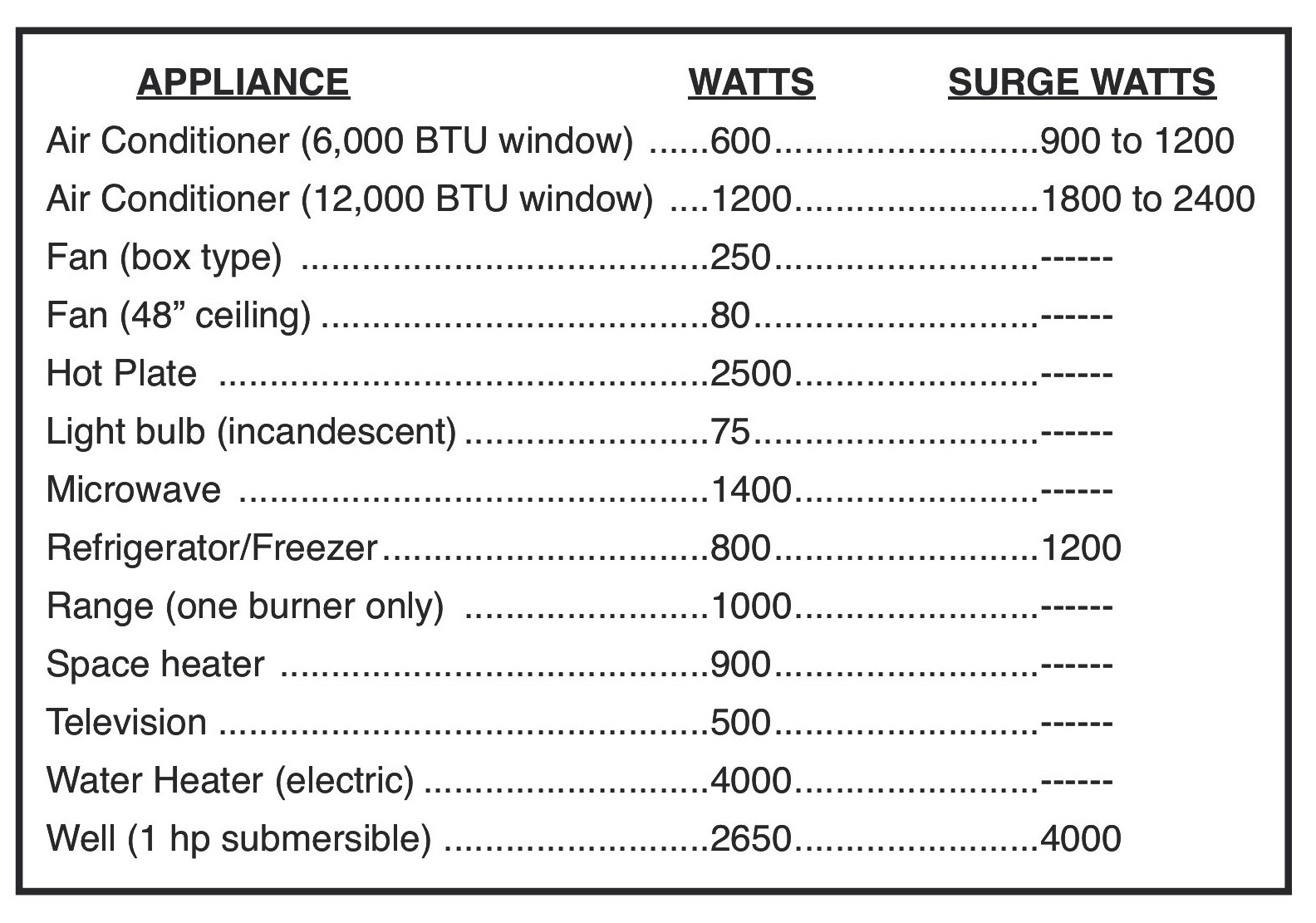
Image Source: www.howtolookatahouse.com
What are Watts? Knowing About Power
Think of watts like how much ‘push’ or power an electrical device needs to work. A light bulb uses watts. A TV uses watts. An air conditioner also uses watts. More watts means the device needs more electrical power.
When you see a number in watts on an AC unit, like 500 watts, it tells you how much power it uses each second it is turned on and cooling. This number helps you figure out how much electricity the AC will use over time.
Watts show the rate of power use. A higher watt number means the unit uses electricity faster. A lower watt number means it uses electricity slower.
Knowing the watts is important because it helps you guess how much your electricity bill might go up when you use the AC. We will look more at this later.
Deciphering BTU Rating
BTU stands for British Thermal Unit. It is a way to measure heat. Specifically, one BTU is the amount of heat needed to raise the temperature of one pound of water by one degree Fahrenheit.
For an air conditioner, the BTU rating tells you how much heat the unit can remove from a room in one hour. A 5000 BTU air conditioner can remove 5000 BTUs of heat from a room each hour.
- Higher BTU means more cooling power.
- Lower BTU means less cooling power.
A 5000 BTU unit is considered a small air conditioner. It is made for cooling small spaces. Using an AC unit with the right BTU rating for the room size is important. If the BTU is too high for the room, it will cool too fast but might not remove enough moisture, making the room feel cold but still damp. If the BTU is too low, it will run all the time and might not cool the room enough.
So, a 5000 BTU rating tells you its cooling ability, and the watts tell you the power it needs to do that job.
The Idea of Power Consumption
Power consumption is simply how much electrical power a device uses over time. For an air conditioner, this is how many watts it uses each hour it runs.
The power consumption of an AC unit is mostly about making the compressor and the fan work. The compressor is the main part that cools the air. It is the biggest user of electricity. The fan blows the cool air into the room.
A 5000 BTU window AC unit needs a certain amount of power to move the cooling stuff inside (refrigerant) and blow the air. This amount is measured in watts.
When the AC is cooling, the compressor is running. This is when the unit uses the most watts. When the room gets cool enough, the compressor might turn off, but the fan might keep running. When only the fan is running, the power consumption is much lower, perhaps around 50-100 watts depending on the unit.
The wattage number for a 5000 BTU AC unit, like 450 watts, is the power it uses when the compressor and fan are both working hard to cool the room.
How Average Usage Affects Power
How much electricity your 5000 BTU AC unit uses in a day or a month depends on how long you run it. This is called average usage.
If your AC uses 450 watts when cooling:
* Running it for 1 hour uses 450 watt-hours.
* Running it for 4 hours uses 450 watts * 4 hours = 1800 watt-hours.
* Running it for 8 hours uses 450 watts * 8 hours = 3600 watt-hours.
Average usage might mean running the AC only during the hottest part of the day, or maybe running it all night to sleep comfortably. The longer it runs, the more power it uses, and the higher your electricity bill will be.
Thinking about your average usage helps you figure out the total power you use.
Grasping Kilowatt Hours (kWh)
Electricity companies charge you based on kilowatt hours, or kWh. A kilowatt hour is a way to measure the total amount of electricity used over time.
Think of watts as speed (how fast electricity is used) and kilowatt hours as distance (total electricity used).
One kilowatt hour is equal to using 1000 watts for one hour. Or, it is like using 500 watts for two hours, or 100 watts for ten hours.
To figure out how many kWh your 5000 BTU AC uses:
1. Find the wattage of your unit (let’s say it’s 450 watts).
2. Figure out how many hours you use it in a day (let’s say 8 hours).
3. Calculate watt-hours per day: 450 watts * 8 hours = 3600 watt-hours.
4. Convert watt-hours to kilowatt hours: Divide by 1000. 3600 watt-hours / 1000 = 3.6 kWh.
So, using a 450-watt AC for 8 hours a day uses 3.6 kWh each day.
This kWh number is what your electricity company uses to calculate your bill.
Calculating Electricity Cost
Now that we know about kilowatt hours, we can figure out the electricity cost to run your 5000 BTU AC.
Your electricity bill shows how much you pay per kilowatt hour. This price is different depending on where you live and your electricity plan. Let’s say, for example, the cost is 15 cents per kWh ($0.15/kWh).
To calculate the cost for one day using our example from before (3.6 kWh per day):
Daily cost = kWh used per day * Cost per kWh
Daily cost = 3.6 kWh * $0.15/kWh = $0.54
So, running the AC for 8 hours might cost about 54 cents per day in this example.
To find the cost for a month (assuming 30 days):
Monthly cost = Daily cost * Number of days
Monthly cost = $0.54/day * 30 days = $16.20
This is just an example. Your cost will depend on:
* The exact wattage of your unit.
* How many hours you run it each day (average usage).
* How much your electricity company charges per kWh.
You can usually find the cost per kWh on your electricity bill or on the company’s website.
A Note on Amps
Amps measure the flow of electrical current. Think of watts as power and amps as the amount of electricity flowing.
The relationship between watts, volts, and amps is: Watts = Volts * Amps.
In the US, standard home voltage is usually around 110-120 volts.
For a 5000 BTU AC unit using 450 watts at 115 volts:
Amps = Watts / Volts
Amps = 450 watts / 115 volts ≈ 3.9 Amps
This number is useful for safety. Electrical circuits in your home are rated for a certain number of amps (like 15 amps or 20 amps). You need to make sure the total amps of all devices plugged into one circuit does not go over the limit.
A single 5000 BTU AC unit usually uses a low number of amps, so it can typically be plugged into a standard wall outlet without problems, as long as other high-power devices are not on the same circuit. Always check the unit’s label for the actual amp draw.
Interpreting Energy Efficiency Ratio (EER)
The Energy Efficiency Ratio (EER) is a key number for air conditioners. It tells you how efficiently an AC unit uses electricity to cool.
EER is calculated like this: EER = BTU / Watts.
It compares the cooling power (BTU) to the electrical power used (watts).
- A higher EER means the unit is more efficient. It uses less watts to remove the same amount of heat (BTUs).
- A lower EER means the unit is less efficient. It uses more watts to remove the same amount of heat.
For a 5000 BTU air conditioner, the EER helps explain why one unit might use 450 watts and another might use 500 watts.
If you have two 5000 BTU units:
* Unit A has an EER of 11. Watts = BTU / EER = 5000 / 11 ≈ 455 watts.
* Unit B has an EER of 10. Watts = BTU / EER = 5000 / 10 = 500 watts.
Unit A is more efficient. It uses fewer watts to provide the same 5000 BTUs of cooling.
Choosing a unit with a higher EER might cost a little more to buy, but it will use less electricity and cost less to run over time. This difference in operating cost can add up.
Most 5000 BTU window AC units available today have an EER between 9.7 and 11. Older units might have lower EERs. Units with the Energy Star label meet certain efficiency standards, often having higher EERs.
The Unit’s Power Consumption Explained
Let’s break down the power consumption of a 5000 BTU window AC unit.
The main parts that use power are:
1. The Compressor: This is the heart of the cooling system. It pumps the refrigerant that cools the air. The compressor uses most of the unit’s power.
2. The Fan Motor: This motor spins the fan that pulls air into the unit and blows the cool air back into the room. There is usually a fan for the inside air and sometimes another fan for the outside part. The fan uses some power, but much less than the compressor.
3. Control Panel/Electronics: The buttons, lights, and sensors use a very small amount of power.
When the AC is turned on and actively cooling (compressor running), this is when the total power consumption (watts) is at its highest point. For a 5000 BTU unit, this peak wattage is typically between 400 and 550 watts, depending on the EER and the specific design.
When the room reaches the set temperature, the thermostat tells the compressor to turn off. The fan might continue to run to move air around the room and check the temperature. When only the fan is running, the power consumption drops significantly. It might be 50 watts, 80 watts, or 100 watts, depending on the fan speed setting (low, medium, high).
The unit switches between high power mode (cooling with compressor and fan) and low power mode (fan only) to keep the room at the right temperature. The average power consumption over a long period will be somewhere between the high power and low power numbers, depending on how often the compressor runs.
Factors like outside temperature, how well the room is insulated, sunlight, and humidity affect how long the compressor needs to run, which directly impacts the total power consumption and operating cost.
What Affects the Actual Wattage?
While a 5000 BTU unit has a listed wattage or EER, the actual power it uses at any moment can vary slightly and is affected by several things:
- Outside Temperature: When it’s very hot outside, the AC unit has to work harder to remove heat. This can make the compressor use slightly more power, or more likely, it will just run for longer periods without turning off.
- Inside Temperature Setting: If you set the temperature very low, the AC will run longer to reach that setting. If you set it higher, it won’t need to cool as much, so it runs less.
- Room Size and Insulation: A 5000 BTU unit is for a specific room size (usually up to 150 sq ft). If the room is larger or poorly insulated (old windows, thin walls, drafts), the unit will struggle and might run constantly at its peak wattage.
- Sunlight: Direct sunlight shining into the room through windows adds a lot of heat. The AC has to work harder to remove this extra heat.
- Humidity: High humidity makes a room feel hotter. AC units also remove moisture from the air (dehumidify). This process uses energy. In very humid conditions, the unit might use slightly more power or run longer cycles.
- Unit Condition: A dirty air filter makes the unit work harder, reducing efficiency and potentially increasing power use slightly or causing parts to wear out faster. Blocked coils (inside or outside) also make the unit less efficient.
- Voltage: The voltage from your wall outlet should be close to what the AC unit is designed for (usually 115V or 120V). If the voltage is too low, it can make the motor work harder and use more amps, although the wattage might stay similar.
These factors mean that while a unit might be rated at 450 watts, it could pull slightly more or less power depending on the exact conditions at that moment. More importantly, these factors determine how long the unit runs at its peak wattage.
Focusing on Window AC Unit
The 5000 BTU size is most commonly found in window AC units. These units are designed to be installed in a window or sometimes through a wall.
A window AC unit has all its parts in one box: the compressor, coils, fan, and controls. One part of the unit faces inside the room (blowing cool air), and the other part faces outside (releasing hot air).
5000 BTU window AC units are popular because:
* They are small and lightweight.
* They are relatively inexpensive to buy.
* They use less power than larger AC units.
* They are often easy to install in a standard window.
* They are perfect for cooling small, single rooms.
The power consumption numbers (watts, amps, kWh) we have discussed are typical for these types of window units. While there might be portable AC units or through-the-wall units with a 5000 BTU rating, the window unit is the most common style at this size.
Comparing Operating Cost Based on EER
Let’s compare the operating cost of two different 5000 BTU window AC units running for the same amount of time.
Assume both units run for 8 hours per day for 30 days in a month (total 240 hours).
Assume the electricity cost is $0.15 per kWh.
Unit A: EER of 10
* Watts = BTU / EER = 5000 / 10 = 500 watts
* kWh per hour = 500 watts / 1000 = 0.5 kWh/hour
* Total kWh per month = 0.5 kWh/hour * 240 hours = 120 kWh
* Monthly operating cost = 120 kWh * $0.15/kWh = $18.00
Unit B: EER of 11 (more efficient)
* Watts = BTU / EER = 5000 / 11 ≈ 455 watts
* kWh per hour = 455 watts / 1000 = 0.455 kWh/hour
* Total kWh per month = 0.455 kWh/hour * 240 hours ≈ 109.2 kWh
* Monthly operating cost = 109.2 kWh * $0.15/kWh ≈ $16.38
In this example, the unit with the higher EER (Unit B) costs about $1.62 less to run per month. Over a cooling season of 3-4 months, that’s a saving of $5 to $6. It might not seem like a huge amount, but over the life of the unit (many years), the savings add up. Also, if electricity prices go up, the savings from a higher EER unit become even bigger.
Choosing an energy-efficient model with a higher EER is a smart way to lower your long-term operating cost.
Simple Calculation Table: Watts, kWh, and Cost
This table shows the estimated watts and daily/monthly kWh for a 5000 BTU AC unit at different EER levels, assuming 8 hours of daily usage and $0.15/kWh electricity cost.
| EER | Estimated Watts | Daily kWh (8 hrs) | Monthly kWh (30 days) | Estimated Monthly Cost ($0.15/kWh) |
|---|---|---|---|---|
| 9.7 | 515 Watts | 4.12 kWh | 123.6 kWh | $18.54 |
| 10.0 | 500 Watts | 4.00 kWh | 120.0 kWh | $18.00 |
| 10.5 | 476 Watts | 3.81 kWh | 114.3 kWh | $17.15 |
| 11.0 | 455 Watts | 3.64 kWh | 109.2 kWh | $16.38 |
Note: These are estimates. Actual numbers for a specific unit may vary slightly.
This table makes it clear that a higher EER unit uses fewer watts and less kWh over time, leading to a lower estimated electricity cost.
Bringing Operating Cost Together
The total operating cost of your 5000 BTU air conditioner depends on several things we have talked about:
- The unit’s wattage: This is tied to its EER. A unit with lower wattage (higher EER) costs less per hour to run.
- How many hours you use it: Running it longer uses more kWh and costs more. This is your average usage.
- Your electricity rate: The price per kWh from your power company. A higher rate means each kWh costs more.
- Factors like temperature and insulation: These affect how often and how long the compressor runs at its peak wattage.
To estimate your monthly operating cost:
* Find the unit’s wattage or EER. (Look on the box or the unit’s label).
* Estimate your average daily usage in hours.
* Find your electricity rate per kWh.
* Calculate: (Watts / 1000) * Hours used per day * Number of days * Cost per kWh = Estimated Cost.
Example: 450-watt unit, 10 hours/day usage, 30 days/month, $0.20/kWh rate.
Cost = (450 / 1000) * 10 * 30 * $0.20
Cost = 0.45 kWh/hr * 10 hrs/day * 30 days/month * $0.20/kWh
Cost = 4.5 kWh/day * 30 days/month * $0.20/kWh
Cost = 135 kWh/month * $0.20/kWh
Cost = $27.00 per month.
Keeping track of your average usage and knowing your electricity rate helps you understand and control the operating cost.
Simple Steps to Lower Power Consumption
You can do things to make your 5000 BTU AC unit use less power and cost less to run:
- Set the temperature higher: Every degree lower you set the thermostat makes the AC work harder and use more power. Set it as high as you feel comfortable, maybe 75-78°F (24-26°C) when you are home, and higher when you are away.
- Use a fan: A ceiling fan or a small portable fan can help move the cool air around the room, making it feel cooler. This means you might not need to set the AC temperature so low. Fans use much less power than the AC compressor.
- Improve insulation: Close windows and doors tightly. Use curtains or blinds to block direct sunlight, especially on windows facing the sun. Add weatherstripping around doors and windows if needed to stop cold air from leaking out and hot air from coming in.
- Clean the filter: A dirty air filter blocks airflow. Clean or replace the filter often, usually every few weeks during heavy use. A clean filter helps the unit run more efficiently.
- Keep outdoor parts clear: Make sure nothing is blocking the back part of the window unit outside. It needs to release heat freely.
- Use timers: If your unit has a timer, use it to turn the AC off when you don’t need it, like when you are at work. Some units can also be programmed to turn on before you get home.
- Buy efficient units: If you are buying a new unit, look for the EER rating and the Energy Star label. A unit with a higher EER will use less watts for the same cooling power, saving you money over time.
- Right size the unit: Make sure 5000 BTU is the right size for your room (around 100-150 sq ft). An oversized unit cycles on and off too much, using more power overall and not removing humidity well. An undersized unit runs constantly and might not cool enough.
By doing these simple things, you can help your 5000 BTU air conditioner run more efficiently, use less electricity, and lower your operating cost.
Frequently Asked Questions About 5000 BTU AC Power
Here are answers to common questions about how much electricity a 5000 BTU air conditioner uses.
Q: How many watts does a 5000 BTU air conditioner use?
A: A 5000 BTU air conditioner typically uses between 400 and 550 watts when the compressor is running. The exact number depends on the unit’s energy efficiency (EER).
Q: Is a 5000 BTU AC unit expensive to run?
A: Compared to larger AC units, a 5000 BTU unit is relatively inexpensive to run. The cost depends on its wattage, how often you use it, and your local electricity rate. Running it for 8 hours a day might cost roughly $15-$20 per month, based on average rates.
Q: What is EER and why is it important?
A: EER stands for Energy Efficiency Ratio. It measures how well an AC unit uses electricity to cool (BTU/Watt). A higher EER means the unit is more efficient and uses less power to provide the same cooling, which saves you money on electricity bills over time.
Q: How can I figure out the operating cost of my 5000 BTU AC?
A: You need the unit’s wattage (or EER), how many hours you use it per day/month, and your electricity cost per kilowatt hour (kWh). The formula is (Watts / 1000) * Hours used * Cost per kWh.
Q: How many amps does a 5000 BTU AC draw?
A: A 5000 BTU AC unit typically draws between 3.5 and 5 amps when running, depending on its wattage and voltage (usually 115V). This is a low amp draw and usually fine for a standard home outlet.
Q: Does a 5000 BTU AC unit use a lot of kilowatt hours (kWh)?
A: A 5000 BTU unit uses a relatively small amount of kWh compared to larger units. For example, running a 450-watt unit for 8 hours uses 3.6 kWh. Your total monthly kWh depends on how long you use the unit each day.
Q: Will running the fan only on a 5000 BTU AC use much power?
A: No, running only the fan uses much less power than running the compressor. The fan motor might use only 50-100 watts, while the compressor and fan together use 400-550 watts.
Q: How does room size affect power consumption?
A: If the room is too big for a 5000 BTU unit (over ~150 sq ft) or poorly insulated, the unit will run constantly at its peak wattage and might not cool effectively. This increases its total power consumption and operating cost. Using the right size unit for the room is best.
Q: Should I get a 5000 BTU unit with a higher EER?
A: Yes, if you plan to use the unit often, choosing one with a higher EER means lower watts, lower kWh usage, and lower electricity costs over the life of the unit, saving you money in the long run.
Q: Can a 5000 BTU AC plug into any wall outlet?
A: Yes, almost all 5000 BTU window AC units are designed to plug into a standard 115V or 120V wall outlet. They draw a low number of amps, usually well below the limit of a typical home circuit (like 15 or 20 amps). However, avoid plugging it into an outlet that already has other high-power devices running.