
How does a gas fridge work? A gas fridge cools food by using heat from a gas flame (like propane) to start a special cooling cycle. This cycle uses a mix of liquids and gases, mainly ammonia and water, along with a little bit of hydrogen gas, to create cold inside the fridge box without needing moving parts like a compressor. This kind of fridge is called an Absorption refrigerator because it cools things by absorbing heat, not by compressing a gas like regular electric fridges do. It’s great for places where electricity isn’t always available, like in RVs or cabins.
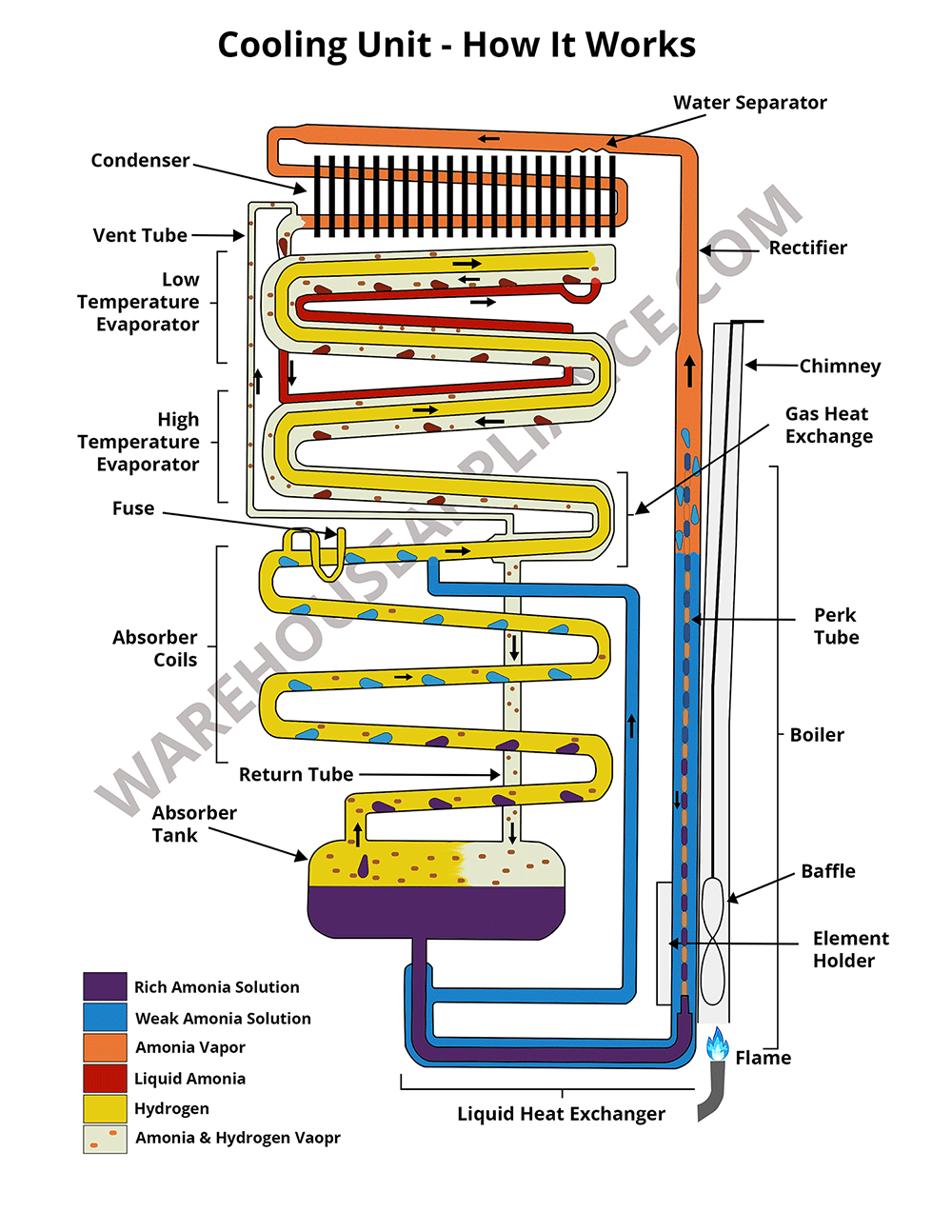
Image Source: www.warehouseappliance.com
Grasping the Basic Idea
Think of a gas fridge as a clever loop of pipes. Inside this loop, different liquids and gases flow around. The main job is to make a liquid inside the fridge’s freezer section turn into a gas. When a liquid turns into a gas, it sucks heat away from its surroundings. This sucking away of heat is what makes things cold.
In a normal electric fridge, a pump called a compressor pushes a special cooling gas (like Freon or similar). This gas changes state from liquid to gas and back. The compressor does the hard work of pushing and squeezing the gas to make the cooling happen.
A gas fridge is different. It doesn’t have a compressor or any main moving parts in its cooling system. Instead, it uses heat from a small flame or an electric heating element to make the liquids and gases move and change state. This heat acts like the “pump.”
The Key Ingredients
The secret to a gas fridge lies in the stuff moving inside the pipes. There are three main things:
- Ammonia: This is the main cooling stuff. It’s a gas at room temperature but becomes a liquid when cool and under pressure.
- Water: This is used to soak up the ammonia gas. Think of it like a sponge for ammonia.
- Hydrogen Gas: This helps the ammonia turn into a gas very easily inside the part that makes the cold.
These three things flow through the system in different places. They work together in a specific loop, which is often called the Ammonia refrigeration cycle or the Gas absorption cycle.
How the Heat Starts Everything
The system needs a heat source to get started. This is usually a small flame from burning propane gas. Some fridges can also use an electric heating element plugged into a wall socket or generator. Whether it’s gas or electric heat, it does the same job: it heats up a special part of the fridge.
The Boiler in Gas Fridge Systems
The heat source focuses on a section called the Boiler in gas fridge. This is typically a thick pipe or vessel. Inside the boiler is a strong mixture of water and ammonia.
When the flame heats the boiler, it boils the ammonia out of the water. Ammonia boils at a much lower temperature than water. So, the heat makes the ammonia turn into a gas and rise up the pipes, leaving most of the water behind.
Imagine boiling water on a stove. Steam comes off the water. In the fridge’s boiler, it’s like boiling the ammonia out of the water mixture. The ammonia gas is now hot and moving upwards.
Following the Ammonia: The Gas Absorption Cycle
Now that the ammonia gas is hot and separated from the water (mostly), it starts its journey through the fridge’s pipes. This journey involves several steps:
Step 1: Heating and Separation (The Boiler)
We just talked about this. Heat from the gas flame or electric element goes to the boiler. The strong water-ammonia mix gets hot. The ammonia boils off as a hot gas. It goes up, and the weaker water-ammonia mix starts to flow back to another part of the system.
Step 2: Cooling the Hot Gas (The Condenser)
The hot ammonia gas goes up from the boiler to the outside back of the fridge. Here, it travels through a set of winding pipes with fins, usually black. This section is called the Condenser absorption fridge.
Just like steam from a pot hits cooler air and turns back into water droplets, the hot ammonia gas gives off its heat to the surrounding air as it passes through the condenser pipes. The fins help get rid of the heat faster. As the hot ammonia gas cools down, it turns back into a liquid. Now we have relatively cool liquid ammonia.
Step 3: Getting Ready to Cool (Pressure Release)
From the condenser, the liquid ammonia flows down to the freezer section inside the fridge. Before it enters the cooling part (the evaporator), it usually passes through a narrow opening or valve. This drops the pressure.
Imagine spraying a spray can. The liquid inside is under high pressure. When it comes out, the pressure drops suddenly, and it feels cold. The same kind of pressure drop happens with the liquid ammonia here. This drop in pressure makes the liquid ammonia ready to turn into a gas very easily.
Step 4: The Cooling Action (The Evaporator)
Now the liquid ammonia flows into the Evaporator gas fridge. This is the part of the system that is actually inside the freezer and fridge compartments. It looks like a set of bent pipes or shelves.
Here’s where the Hydrogen gas in fridge plays a key role. The evaporator pipes are filled with hydrogen gas. The hydrogen gas makes it much easier for the liquid ammonia to evaporate, or turn into a gas.
When the low-pressure liquid ammonia meets the hydrogen gas, it rapidly evaporates. Turning from a liquid to a gas requires energy, and this energy is pulled as heat from the surroundings – which is the inside of your fridge! This process makes the evaporator pipes, and therefore the inside of your fridge, very cold. This is the core cooling action.
Step 5: Soaking Up the Ammonia (The Absorber)
Now we have ammonia gas (mixed with hydrogen) coming out of the evaporator, along with the weaker water-ammonia mix that flowed back from the boiler. They meet in a section called the absorber.
The absorber is another set of pipes, often with fins. Here, the ammonia gas mixes with the weaker water-ammonia solution. Water loves to soak up ammonia gas. Think of it like the water is a sponge soaking up the ammonia gas. The hydrogen gas, which doesn’t get absorbed by the water, separates and flows back towards the evaporator to be used again.
As the water absorbs the ammonia gas, it becomes a strong water-ammonia mixture again. This process also releases a bit of heat, which is why the absorber pipes on the back of the fridge can feel warm.
Step 6: Back to the Boiler (The Pump)
The strong water-ammonia mixture is now ready to go back to the boiler to start the cycle again. In many gas absorption fridges, there isn’t a mechanical pump here. Instead, the design uses gravity and maybe small bubbles created by slight heating (a thermo-syphon effect) to move the liquid mixture back up to the boiler.
So, the strong water-ammonia mix flows back down and over to the boiler section.
The cycle is now complete and ready to repeat. Heat from the gas flame or electric element boils the ammonia out of the strong mix in the boiler. The hot ammonia gas goes up to the condenser to cool and turn back into a liquid. The liquid ammonia goes to the evaporator to mix with hydrogen, evaporate, and make cold. The ammonia gas then goes to the absorber to be soaked up by water, and the resulting strong mix flows back to the boiler. The hydrogen and weaker water loops also continue their parts of the cycle.
This continuous loop is the Chemical process gas fridge uses to make cold without any moving parts in the cooling circuit itself.
Visualizing the Cycle Steps
It helps to picture the path the different substances take.
- Water/Ammonia Strong Mix: Starts in the absorber, flows to the boiler.
- Ammonia Gas (Hot): Comes out of the boiler, goes up to the condenser.
- Ammonia Liquid (Cool): Comes out of the condenser, flows down to the evaporator.
- Ammonia Gas (Cold, mixed with Hydrogen): Comes out of the evaporator, goes to the absorber.
- Water/Ammonia Weak Mix: Comes out of the boiler, flows to the absorber.
- Hydrogen Gas: Stays mostly in the evaporator loop, flowing between the evaporator and absorber.
Here is a simple table showing the main parts and what happens there:
| Part | Main Substance Flowing In | Main Substance Flowing Out | What Happens Here |
|---|---|---|---|
| Boiler | Strong Water-Ammonia Mix | Hot Ammonia Gas, Weak Water-Ammonia | Water-Ammonia mix is heated; Ammonia boils into gas. |
| Condenser | Hot Ammonia Gas | Cool Ammonia Liquid | Ammonia gas cools down and turns back into liquid. |
| Evaporator | Cool Ammonia Liquid, Hydrogen | Ammonia Gas, Hydrogen | Ammonia liquid evaporates, making cold; mixes with H₂. |
| Absorber | Ammonia Gas, Hydrogen, Weak Water-Ammonia | Strong Water-Ammonia Mix, Hydrogen | Water absorbs Ammonia gas; H₂ separates; Mix gets strong. |
Propane Fridge Operation: The Heat Source
For many people, especially in RVs or off-grid cabins, the heat comes from burning Propane fridge operation. A small burner assembly is located directly under the boiler tube. A control knob lets you adjust the flame size, which controls how much heat goes into the boiler. More heat means the cycle works faster and the fridge gets colder. Less heat means it works slower and is less cold.
Propane is stored in tanks as a liquid, but it turns into a gas before it burns. A small amount of propane gas is sent to the burner, mixed with air, and ignited. The flame is usually small and blue. Safety features are built in, like a thermocouple that shuts off the gas if the flame goes out.
The RV refrigerator working principle is exactly this same absorption cycle. RVs are a common place to find these types of fridges because they can run on propane when driving or parked without electrical hookups, or switch to an electric heating element when plugged in. This dual-power ability is a key feature.
Why Use a Gas Fridge?
Given that they are more complex in their internal chemistry than a simple compressor fridge, why use them?
- Silent Operation: Because the cooling cycle doesn’t have a compressor or other main moving parts, gas fridges are nearly silent when running. This is a big plus in small spaces like RVs or cabins.
- Works Without Electricity (on Gas): The biggest advantage is their ability to cool using only heat from burning propane or natural gas. This makes them perfect for off-grid locations, camping, or during power outages.
- Simple Design (in the cooling loop): While the chemistry is complex, the absence of mechanical pumps in the cooling loop means fewer parts that can wear out in that specific part of the system.
- Dual Power: Many models can switch between gas and electric power, offering flexibility.
Limitations and Things to Know
While great for certain situations, gas fridges aren’t perfect for everything:
- Needs to be Level: For the liquids and gases to flow correctly through the pipes and complete the cycle (especially the gravity-assisted flow back to the boiler/absorber), the fridge needs to be reasonably level. If it’s too tilted, the flow can stop, and the fridge won’t cool properly.
- Slower Cooling: They generally take longer to cool down when first started compared to compressor fridges.
- Sensitive to Outside Temperature: Extreme heat can sometimes affect their performance, especially if they are installed in a place without good airflow around the condenser.
- Safety: Like any appliance using combustion, proper ventilation is crucial to prevent carbon monoxide buildup. The burner area also needs occasional cleaning.
- Maintenance: While the cooling loop has no moving parts, the burner and flue need cleaning to work efficiently. The sealed cooling system itself usually cannot be easily repaired if there’s a leak or blockage; often, the entire cooling unit needs replacing.
Deciphering the Role of Each Component
Let’s look a bit closer at the specific jobs of some parts we mentioned:
The Boiler in Gas Fridge
As discussed, this is where the initial energy input happens. The heat source (gas flame or electric element) is focused here. It contains the strong solution of water and ammonia. The heat provides the energy needed to separate the ammonia from the water by boiling the ammonia. This creates the high-pressure ammonia gas needed to start the journey through the condenser.
Condenser Absorption Fridge
This is the heat exchanger on the back of the fridge where the hot ammonia gas gives up its heat to the outside air. It’s typically a series of zig-zagging pipes with thin metal fins attached. The fins increase the surface area, helping the heat escape faster. As the heat leaves the ammonia gas, it changes phase from gas back to liquid. This is a crucial step as the cooling effect happens when the liquid turns back into a gas later in the cycle.
Evaporator Gas Fridge
This is the part inside the fridge and freezer compartments. It’s where the cooling actually happens. The low-pressure liquid ammonia enters the evaporator pipes. Here, it meets the hydrogen gas. The presence of hydrogen lowers the partial pressure of the ammonia, making it evaporate very easily and quickly. This evaporation process absorbs heat from the surrounding air and food inside the fridge, making it cold. The evaporator pipes get very cold, sometimes covered in frost.
Hydrogen Gas in Fridge
The hydrogen isn’t part of the refrigeration cycle itself in the same way ammonia and water are (it doesn’t change state). Its main role is to lower the pressure within the evaporator section. By lowering the pressure that the ammonia “feels” in the evaporator, it allows the liquid ammonia to boil and turn into a gas at a much lower temperature than it would at higher pressures. This allows the cooling to happen effectively inside the fridge box. The hydrogen flows in a loop between the evaporator and the absorber, helping the ammonia evaporate and then separating from the ammonia in the absorber.
Chemical Process Gas Fridge
At its heart, the entire operation relies on a fascinating Chemical process gas fridge design. It’s not just about pumping a gas; it’s about using the chemical properties of ammonia, water, and hydrogen, and how they interact with heat and pressure changes. The water absorbs ammonia gas, the heat separates them, the condenser cools the ammonia gas into a liquid, and the hydrogen helps the liquid ammonia evaporate easily to create cold. It’s a continuous chemical dance powered by simple heat.
Connecting to RV Refrigerator Working Principle
When people talk about the RV refrigerator working principle, they are almost always talking about the absorption cycle we’ve described. RVs need fridges that can run on different power sources. When hooked up to shore power or a generator, the electric heating element is used in the boiler. When driving or boondocking, the propane burner provides the heat. This flexibility is key to RV life.
The main considerations for an RV fridge are:
- Keeping it level for best performance.
- Ensuring good ventilation on the outside back of the fridge, as this is where the condenser and absorber are located and need to dissipate heat.
- Regularly checking and cleaning the propane burner and chimney (flue) to ensure efficient heating and prevent blockages.
Comparing to Compressor Fridges
Most fridges in homes use a compressor. How is that different?
| Feature | Gas Absorption Fridge | Compressor Fridge |
|---|---|---|
| Cooling Method | Uses heat and a chemical absorption process | Uses mechanical compression of a refrigerant |
| Main Moving Parts | Few to none in cooling loop (maybe tiny pump in some designs, but not typical) | Compressor pump |
| Power Source | Heat (Gas or Electric) | Electricity only (powers compressor) |
| Noise | Very quiet | Can be noisy due to compressor |
| Efficiency | Generally less efficient than compressor fridges for the same amount of cooling | More energy efficient |
| Leveling | Must be reasonably level | Can operate on slopes |
| Initial Cool Down Time | Slower | Faster |
| Complexity | Complex chemistry, simple mechanics | Simple chemistry, complex mechanics |
So, while a compressor fridge is better if you always have stable electricity and need fast cooling, a gas absorption fridge is a fantastic solution for places where electricity is unreliable or unavailable, offering silent operation and fuel flexibility.
Maintaining Your Gas Fridge
To keep your gas fridge running smoothly, especially for Propane fridge operation in an RV, some basic maintenance is important:
- Keep it Level: This is the most common issue. If your fridge isn’t cooling well, check if your RV or fridge is level.
- Clean the Burner and Flue: Soot or rust can build up in the propane burner area and the chimney (flue) above it. This reduces heating efficiency. Carefully clean these areas according to your fridge’s manual.
- Check for Blockages: Ensure nothing is blocking the vents on the outside of the fridge, as this reduces airflow needed by the condenser and absorber. Spiders and insects can build nests in the burner or flue.
- Inspect the Flame: The propane flame should be mostly blue. A yellow or orange flame can mean incomplete burning and soot buildup.
- Seal: Make sure the door seals tightly to keep the cold air in.
If the fridge stops cooling completely, and you’ve checked the level and heat source, there might be a blockage in the sealed cooling system itself. This often requires professional service or replacement of the cooling unit.
Frequently Asked Questions
Do gas fridges use electricity at all?
Many gas fridges, especially those in RVs, are designed to run on either gas or electricity. When using gas, they might use a very small amount of 12V electricity for the control panel, safety sensors, or interior light, but the cooling itself comes from the heat of the gas flame, not an electric compressor. When running on electric, an electric heating element replaces the gas flame as the heat source.
Are gas fridges safe?
Yes, when installed correctly and maintained properly. They are designed with safety features like automatic shut-off if the flame goes out. However, because they burn fuel, proper ventilation is absolutely essential to prevent carbon monoxide from building up, especially in enclosed spaces like RVs. Always follow installation guidelines and use CO detectors.
How long does a gas fridge take to get cold?
Gas absorption fridges cool down slower than compressor fridges. It can take several hours (often 6-8 hours or more) for the fridge and freezer sections to reach their proper temperatures after being turned on. It’s best to turn them on the day before you plan to load them with food.
Can I run my RV fridge on propane while driving?
Yes, many RVers safely run their absorption fridges on propane while driving. Modern RV fridges have safety systems designed for this. However, some tunnels or ferries may require propane tanks and appliances to be turned off. Always check local regulations and your fridge’s manual.
What does “absorption refrigerator” mean?
An Absorption refrigerator cools by absorbing heat. It uses a heat source (like a gas flame) to drive a chemical process where a refrigerant (ammonia) is absorbed and then separated from an absorbent (water). This is different from a compressor fridge, which uses mechanical work (compression) to move heat.
What is the role of hydrogen gas in the cooling cycle?
The Hydrogen gas in fridge systems helps the ammonia evaporate at a lower temperature and pressure inside the evaporator (the cold part). This makes the cooling process more efficient at the low temperatures needed inside the fridge.
Why does my gas fridge need to be level?
The cycle relies on gravity and thermal action (like boiling bubbles pushing liquid) to move the liquid solutions and gases through the pipes. If the fridge is not level, the liquids can pool in the wrong places, interrupting the flow and stopping the cooling cycle. Even a slight tilt can affect performance.
What is the Ammonia refrigeration cycle?
The Ammonia refrigeration cycle is the specific loop of chemical and physical changes that ammonia, water, and hydrogen go through in an absorption fridge to create cold. It involves heating, condensing, evaporating, and absorbing these substances in a continuous cycle.
Where does the heat go?
The heat removed from inside the fridge is released to the outside air through the fins on the back of the fridge, mainly from the condenser and absorber sections. This is why these parts feel warm when the fridge is running.
This detailed look shows that while the idea of cooling with heat seems backward at first, the clever chemical and physical design of the gas absorption fridge makes it a highly effective and useful technology, especially for situations where traditional electricity isn’t the primary power source.