
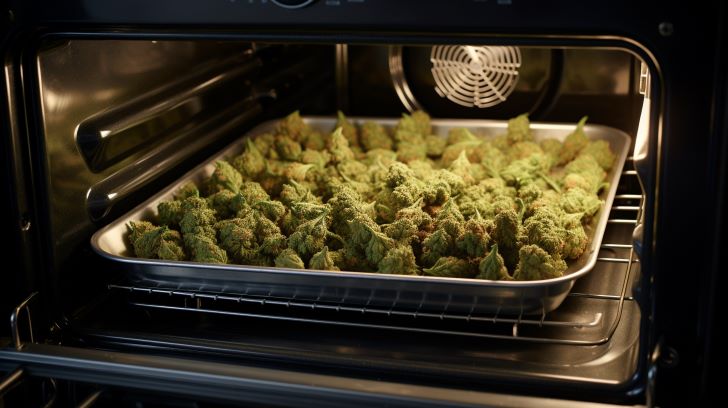
Image Source: www.true-blue.co
How To Decarb Weed Without Oven: Alternative Methods
Decarboxylation is a key step if you want to make edibles, oils, or tinctures from weed. It changes compounds like THCA into THC, which your body can use. An oven is common for this, but you can also decarb weed without an oven. This guide looks at different ways to do it using things you might already have at home. These include stovetop methods, water baths, and even potentially a microwave, though some methods work better and are safer than others.
What Decarbing Means for Your Weed
Weed fresh off the plant has compounds like THCA and CBDA. These are not the same as THC and CBD. THCA and CBDA do not make you feel “high.” They need heat to change. This change is called decarboxylation. It removes a carboxyl group (a small part of the molecule). This turns THCA into THC and CBDA into CBD.
Think of it like cooking an egg. A raw egg is different from a cooked one. Heat changes it. Decarbing is like cooking your weed to make the active parts ready to work.
If you eat raw weed, you will not feel the effects of THC. The THCA needs heat first. That is why decarbing is needed for edibles, oils, and drinks. It makes the THC ready for your body to use when you eat or drink it.
Why Look Beyond the Oven?
Most guides tell you to use an oven. You spread your weed on a tray and bake it at a certain temperature. This works well.
But ovens are not perfect.
* They can heat unevenly. Some spots might get hotter than others. This can burn your weed.
* The smell can be strong. Oven decarbing often fills the whole house with a powerful smell.
* Not everyone has an oven, or they might want a quieter way.
This is where alternative cannabis decarb methods come in. They offer different ways to control heat or reduce smell. They allow for low temperature cannabis decarb, which can help keep delicate terpenes (smelly compounds) safe. Finding an easy decarb weed no oven method is possible.
Trying Stovetop Cannabis Decarboxylation
You can use your kitchen stove to decarb weed. This method uses direct heat from a burner. It needs close watching.
There are a couple of ways to do stovetop cannabis decarboxylation. One uses a pan directly. Another uses oil or butter.
Grasping the Direct Pan Method (Use with Care)
This method puts your weed right into a pan on the stove. It is fast but risky. It is hard to control the heat. Weed can burn quickly. Burning ruins the THC and makes it taste bad.
Steps for Direct Pan Method:
1. Break up your weed. Make pieces about the size of rice grains. Do not grind it too fine.
2. Get a pan. A non-stick pan is best.
3. Put the pan on the stove. Set the heat to very low. Use the lowest setting possible.
4. Put the broken-up weed in the pan. Spread it out thin.
5. Watch it the whole time. Stir it often, maybe every minute.
6. Look for color change. It should turn a light brown color. It will also get dry and crumbly.
7. Smell it carefully. It should smell different, more “toasted” or “nutty.” If it smells burnt, it is too hot.
8. Heat it for maybe 5-10 minutes. This time is very short because the heat is direct. It can vary a lot based on your stove and pan.
9. Take the pan off the heat. Let the weed cool down completely in the pan.
Why this method is tricky: It is very hard to keep the pan at the right decarbing temperature (around 230-240°F or 110-115°C for about 30-40 minutes, or 250-300°F or 120-150°C for shorter times). Your stove burner cycles on and off, and the pan surface heats unevenly. This can easily lead to hot spots and burning. This is why many people do not recommend this method.
Interpreting the Oil or Butter Method
This method uses fat (oil or butter) in the pan. The fat helps spread the heat more evenly. It also starts the process of infusing the THC into the fat at the same time. This is less risky than the direct pan method but still needs care.
Steps for Oil or Butter Method:
1. Break up your weed. Small pieces work best.
2. Get a pan. Add oil (like coconut oil) or butter. Use enough fat to cover the weed once it is added.
3. Heat the fat on very low heat. Let it melt if using butter.
4. Add the broken-up weed to the warm fat. Stir it in well.
5. Keep the heat very low. You want tiny bubbles, not rapid boiling. Use a thermometer if you can. Aim for the oil to be around 230-240°F (110-115°C). It is hard to hold this exact temp on a stovetop. You might need to turn the heat off and on.
6. Heat it for 30 minutes to 1 hour or more. Watch it closely. Stir it often.
7. Look for color change in the weed and the fat. The weed will turn darker brown. The fat will change color too.
8. Once done, take it off the heat. Let it cool down. The weed is now decarbed and infused into the fat.
9. Strain out the plant material if you just wanted the oil.
Pros of Stovetop:
* Fast setup. You likely have a pan and stove.
* Combines decarbing and infusing in one step if using fat.
Cons of Stovetop:
* Hard to control temperature exactly.
* High risk of burning if not watched closely.
* Smell can still be strong.
* Uneven heating can lead to varied results.
Stovetop cannabis decarboxylation is a quick non-oven cannabis decarb technique, but it is not the most forgiving. Precision is difficult.
Using a Water Bath Decarb Weed Method
A water bath, also known as a double boiler, is a much safer way to decarb weed on a stove. Water boils at 212°F (100°C). This temperature is below the point where THC degrades much (around 350°F or 175°C) and high enough for decarbing to happen well (ideal is 230-240°F or 110-115°C). Using water as a heat source makes it hard to overheat your weed.
The main idea is to heat your weed using the steam or hot water from boiling water, not direct heat.
Setting up a Double Boiler Method for Decarb
You can buy a double boiler, which is two pots that fit together, one above the other. Or you can make one.
Making a Double Boiler:
1. Get a large pot.
2. Put a few inches of water in the large pot.
3. Find a smaller pot or a heat-safe bowl (like glass or metal) that fits on top of the large pot without its bottom touching the water. The smaller pot should sit on the rim of the large pot.
4. The steam from the boiling water heats the smaller pot.
Using the Double Boiler for Decarbing:
1. Break up your weed into small pieces.
2. Put the weed into the top part of your double boiler (the smaller pot or bowl). You can add a little bit of oil or butter here too, if you plan to infuse later. This helps conduct heat.
3. Put water in the bottom pot. Heat the water to a boil.
4. Put the top pot with weed onto the bottom pot. Make sure the bottom of the top pot does not touch the boiling water directly, only the steam.
5. Keep the water gently boiling to make steam.
6. Stir the weed in the top pot now and then.
7. Heat for 1 to 1.5 hours. Because the temperature is lower (around 212°F from steam), it takes longer than in an oven.
8. The weed will turn a light to medium brown color. It will get dry.
9. Carefully take the top pot off the heat. Let the weed cool.
Using Jars in a Water Bath
Another way to use a water bath is with sealed jars. This is great for controlling smell.
Steps for Jar Water Bath:
1. Break up your weed into small pieces.
2. Put the weed into a heat-safe glass jar. Canning jars work well. Do not fill the jar more than about 3/4 full.
3. Close the lid tightly.
4. Put a towel or cloth in the bottom of a large pot. This keeps the jars from touching the hot bottom and breaking.
5. Place the sealed jars on the cloth in the pot.
6. Fill the pot with water. The water level should go up to the neck of the jars, almost covering them.
7. Heat the water to a gentle boil. Do not boil too hard, or the jars might tip or break.
8. Keep the water boiling gently for 1.5 to 2 hours. The heat transfers through the glass to the weed inside.
9. Check the water level sometimes and add more hot water if needed.
10. After the time is up, carefully take the jars out of the hot water. Use tongs.
11. Let the jars cool completely before opening them. Be careful; there might be pressure inside.
Pros of Water Bath/Double Boiler:
* Very safe temperature. Hard to burn the weed.
* Even heating.
* Less smell, especially with the jar method.
* Uses simple kitchen gear.
Cons of Water Bath/Double Boiler:
* Takes longer than some other methods due to lower temperature.
* Need to watch the water level in the pot.
The water bath decarb weed and double boiler method for decarb are excellent low temperature cannabis decarb options that offer good control and reduce the risk of ruining your material. These are effective non-oven cannabis decarb techniques.
Exploring Sous Vide Cannabis Decarb
Sous vide is a cooking method that uses a heated water bath to cook food sealed in bags. You use a special device called an immersion circulator to keep the water at a very exact temperature for a long time. This method is perfect for precise, low temperature cannabis decarb.
How Sous Vide Works for Decarbing:
1. You set the immersion circulator to the exact temperature needed for decarbing.
2. You seal your weed in a vacuum-seal bag or a high-quality zip-top bag (remove the air using the water displacement method).
3. You put the bag in the heated water bath.
4. The weed heats evenly at the set temperature for the needed time.
Steps for Sous Vide Cannabis Decarb:
1. Break up your weed into small pieces. Do not grind it too fine.
2. Put the broken-up weed into a heat-safe, air-tight bag. Vacuum sealing is best. If using a zip-top bag, place the bag with weed into the water bath, letting the water pressure push the air out before sealing the top.
3. Fill a pot or container with water. Attach your immersion circulator.
4. Set the temperature on the circulator. A common range for decarbing weed with sous vide is 203°F (95°C) to 208°F (98°C). Some people go slightly lower, but 203°F is a good starting point.
5. Once the water reaches the set temperature, put the sealed bag with weed into the water. Make sure the bag is fully underwater. You might need to use a clip to attach it to the side of the pot or add a weight (like a spoon) to the bag.
6. Let it heat for 1.5 to 2 hours. The lower temperature means it needs more time.
7. After the time is up, take the bag out of the water.
8. Let the weed cool completely in the bag before opening it.
Pros of Sous Vide:
* Very precise temperature control. This leads to consistent results.
* Low temperature cooking helps preserve terpenes and avoids burning.
* No smell during the process because the weed is sealed.
* Hands-off once set up.
Cons of Sous Vide:
* Requires special equipment (immersion circulator).
* Takes longer than oven methods.
* Need vacuum seal bags or careful use of zip-top bags.
Sous vide cannabis decarb is one of the best non-oven cannabis decarb techniques if you value precision and odor control. It is an excellent low temperature cannabis decarb method.
Decarb Weed in Microwave (Not Recommended)
Can you decarb weed in a microwave? Technically, yes. Should you? Most people say no. The microwave is the riskiest method.
Microwaves heat water molecules rapidly. This causes fast, uneven heating. It is very hard to control the temperature or time. You are very likely to burn your weed in a microwave. This destroys THC and creates bad-tasting compounds.
This is not an easy decarb weed no oven method because getting it right is difficult.
Steps for Microwave Decarbing (Use extreme caution and know the risks):
1. Break up a very small amount of weed. Small pieces are key.
2. Put the weed on a microwave-safe plate. Spread it thin.
3. Start with very short bursts of power. Try 30 seconds.
4. Check the weed. It should be dry and starting to change color (light brown).
5. Stir it well to try and even out the heat.
6. Repeat with very short bursts (maybe 15-30 seconds), checking and stirring each time.
7. Stop as soon as it looks dry and slightly changed color. This might take only 1-3 minutes total, depending on your microwave power. It can go from done to burnt very fast.
8. Let it cool completely.
Pros of Microwave:
* Very fast.
Cons of Microwave:
* Extremely high risk of burning.
* Very uneven heating.
* Hard to control temperature or time.
* Ruins taste and potency easily.
* Can still smell bad if burnt.
Using the microwave to decarb weed is not recommended for good results or safety. It is an alternative cannabis decarb method, but a poor one.
How to Decarb Hash Without Oven
Hashish and other concentrates (like kief) also need decarbing for edibles or oils. Decarb hash without oven methods are similar to those for flower, but there are some differences.
Hash is more concentrated. It has less plant matter. This means it can heat up faster and burn more easily.
Methods for Decarbing Hash No Oven:
- Water Bath/Double Boiler: This is a good method for hash. Put the hash in a small heat-safe container (like a tiny glass jar or dish). Place it in the top part of a double boiler or in a sealed jar in a water bath, just like with flower. Heat for 60-90 minutes at 212°F (100°C). Watch for it to bubble and change texture. It will go from crumbly or solid to more oily or bubbly.
- Sous Vide: This is also great for hash. Put the hash in a sealed bag. Set the temperature to 203-208°F (95-98°C). Heat for about 1 to 1.5 hours. The hash will change texture.
- Stovetop (Oil/Butter): You can carefully heat hash in oil or butter on the stove. Use very low heat. Add the hash to the warm fat. Stir often. Heat until it stops bubbling and changes texture (gets smoother and mixes into the fat). This might only take 15-30 minutes on very low heat. Watch it closely to avoid burning.
- Direct Pan Stovetop / Microwave: Avoid these for hash even more than flower. Hash burns much faster due to its nature.
When you decarb hash without oven, look for changes in how it looks and acts when heated. It might bubble, melt, or become more liquid-like. Be careful with smell, as heated hash can be very potent.
Comparing Non-Oven Decarb Techniques
Here is a look at the different non-oven cannabis decarb techniques:
| Method | Heat Source | Temperature Control | Time Needed (Approx) | Risk of Burning | Smell Control | Equipment Needed | Notes |
|---|---|---|---|---|---|---|---|
| Stovetop (Direct Pan) | Direct Burner | Very Poor | 5-10 minutes | Very High | Poor | Pan | Not Recommended, very risky. |
| Stovetop (Oil/Butter) | Direct Burner | Poor | 30-60 minutes | Moderate/High | Moderate | Pan, Oil/Butter, Thermometer (helpful) | Can infuse at same time. |
| Water Bath/Double Boiler | Steam/Hot Water | Good (around 212°F) | 1-2 hours | Very Low | Good (esp. jars) | Two pots or Pot & Bowl, Jar (optional) | Safe, reliable, easy setup. |
| Sous Vide | Precise Water Bath | Excellent | 1.5-2 hours | Very Low | Excellent | Immersion Circulator, Bags | Best control, requires special tool. |
| Microwave | Microwave Energy | Very Poor | 1-3 minutes (total) | Extreme | Poor/Bad | Microwave, Plate | Not Recommended, hard to control. |
This table helps show that some alternative cannabis decarb methods are much safer and more reliable than others. Water bath and sous vide offer low temperature cannabis decarb with low risk.
Tips for Easy Decarb Weed No Oven
No matter which non-oven cannabis decarb techniques you choose, some general tips can help you get the best results.
- Use a Thermometer: This is the single best way to improve any stovetop or water bath method. Knowing the actual temperature helps you control the process. Candy thermometers or infrared thermometers can work for pans.
- Break Up, Don’t Powder: Break your weed into small pieces, like popcorn kernels or rice. Do not grind it into a fine powder. Powder can burn faster and is harder to strain out later if you infuse.
- Containers Matter: Use heat-safe glass or metal. For water baths, sealed jars work great for smell control. For sous vide, use bags made for that purpose.
- Patience is Key: Low temperature cannabis decarb takes time. Rushing can lead to burning or incomplete activation. Follow the suggested times for each method.
- Watch and Listen: Pay attention to your weed. Look at the color change. Listen for sizzling (too hot!). If using oil, watch the bubbles.
- Cool Down: Always let the decarbed weed cool completely before using it or storing it. This helps set the compounds.
- Smell Management: Some smell is normal. The jar water bath and sous vide methods lock in most smells. For stovetop, make sure you have good ventilation.
These tips help make your alternative cannabis decarb methods more successful. Achieving easy decarb weed no oven results is possible with the right approach.
Fathoming the Process: How Do You Know It’s Done?
Knowing when your weed is fully decarbed without an oven can be tricky. You can’t always rely on a timer, as heat varies.
Look for these signs:
* Color Change: Fresh weed is green. Decarbed weed will turn a shade of brown. This can range from light yellowish-brown to medium brown, depending on the method and temperature used. Avoid dark brown or black; that’s burnt.
* Texture Change: It will feel very dry and crumbly.
* Smell Change: The smell changes. Fresh weed has a green, sometimes grassy smell. Decarbed weed smells more toasted, nutty, or floral/pungent. A burnt smell means it went too far.
* Bubbling (in Oil/Butter or Concentrates): When decarbing in fat or decarbing hash without oven, you’ll often see small bubbles rising. This is carbon dioxide releasing. The bubbling will slow down and mostly stop when decarboxylation is complete.
These visual and smell cues, combined with using a thermometer when possible, help you judge if your non-oven cannabis decarb techniques worked.
Storing Your Decarbed Weed
Once your weed is decarbed using one of the alternative cannabis decarb methods, let it cool fully. Then, store it in an airtight container. A glass jar with a tight lid is good. Keep it in a cool, dark place. Properly stored, it can last for several months.
Decarbed weed is now ready to be used to make edibles, oils, tinctures, or other products. It is activated and ready for infusion or extraction.
Using non-oven cannabis decarb techniques offers flexibility and control, especially with water bath and sous vide methods. You can achieve reliable decarboxylation without needing an oven, opening up new ways to use your cannabis. Whether you choose low temperature cannabis decarb with precise tools or simpler methods, understanding the process helps you get the best results. Finding an easy decarb weed no oven solution depends on what tools you have and how much control you need.
Frequently Asked Questions (FAQ)
Q: Can I just eat raw weed to get high?
A: No. Raw weed has THCA, not THC. THCA does not make you feel high. You need to heat it (decarb it) first to turn THCA into THC.
Q: Does decarbing always smell?
A: Yes, some smell is unavoidable because compounds are being heated. However, methods like using sealed jars in a water bath or using sous vide in sealed bags significantly reduce the smell compared to open-air methods like oven or direct stovetop.
Q: How long does decarbing take without an oven?
A: It varies by method. Faster methods like direct stovetop are risky and only take 5-10 minutes. Safer, low temperature methods like water bath or sous vide take 1.5 to 2 hours. It depends on the temperature you can maintain.
Q: What temperature is best for decarbing?
A: For activating THC, temperatures around 230-240°F (110-115°C) for 30-40 minutes in an oven are common. Without an oven, lower temperatures are often used for longer times (e.g., 212°F/100°C in a water bath for 1.5-2 hours, or 203-208°F/95-98°C in sous vide for 1.5-2 hours). Higher temps like 250-300°F (120-150°C) can work faster but increase the risk of degrading THC or terpenes, especially with less precise methods.
Q: Can I decarb large amounts without an oven?
A: Yes, but it can be harder to ensure even heating. Sous vide works well for larger amounts if you have a big enough container and immersion circulator. Water bath with multiple jars can also work. Stovetop methods are generally better for smaller batches due to heating difficulties.
Q: What if my weed turns black or smells burnt?
A: It means it got too hot and burned. Burning destroys THC and creates bad tastes. Weed that is burnt is likely not good for making edibles or oils. You’ll need to start over with less heat or a different method.