
How many BTU is a 5 ton air conditioner? A 5-ton air conditioner gives you 60,000 BTUs of cooling power. A “ton” in air conditioning is a measure of cooling ability. It means the unit can remove 12,000 British Thermal Units (BTUs) of heat from a space in one hour. So, a 5-ton unit simply multiplies that number: 5 tons * 12,000 BTUs/ton = 60,000 BTUs.
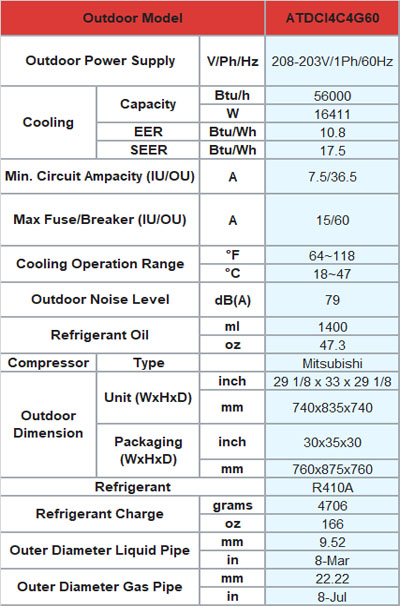
Image Source: www.thermospace.com
Grasping AC Power Units
Let’s talk about how we measure the strength of an air conditioner. We use two main terms: BTU and Ton. It’s helpful to know what these mean. This helps you figure out what size AC you might need. It makes shopping for a unit easier too.
What is BTU?
BTU stands for British Thermal Unit. It measures heat energy. One BTU is the amount of heat needed to raise the temperature of one pound of water by one degree Fahrenheit. This might sound a bit technical. But for air conditioning, think of it this way:
- BTU measures how much heat your AC can move.
- A higher BTU number means the AC can cool a bigger space.
- Or it can cool a space faster.
- It is a standard way to talk about cooling power.
So, when you see an AC unit listed with a certain BTU number, you know its cooling strength. A small window unit might be 5,000 BTUs. A large central AC system could be 60,000 BTUs or more. The number tells you how much heat it can handle.
What is a “Ton” in AC?
The term “ton” might seem strange for an air conditioner. It comes from the old days. Before electric AC, people used ice to cool buildings. Imagine how much cooling you would get from melting a ton of ice in 24 hours. That amount of cooling became the standard.
- One “ton” of cooling is equal to melting one ton (2,000 pounds) of ice in 24 hours.
- This equals 12,000 BTUs of cooling power per hour.
- So, 1 ton = 12,000 BTUs per hour.
- This is the basic link between tons and BTUs for AC units.
This link is always the same. It’s a standard measure. It helps people compare different AC units easily. Instead of saying “a 36,000 BTU unit,” people often say “a 3-ton unit.” It is quicker.
The Standard Conversion: Air conditioner BTU per ton
The most important number to remember is this: 1 ton of air conditioning equals 12,000 BTUs per hour. This is the standard rule. It is always true for figuring out the cooling power of an AC unit based on its tonnage.
- 1 ton = 12,000 BTUs
- 2 tons = 24,000 BTUs
- 3 tons = 36,000 BTUs
- 4 tons = 48,000 BTUs
- 5 tons = 60,000 BTUs
This Standard AC ton to BTU conversion is used everywhere. Manufacturers use it. Installers use it. It’s the foundation for understanding AC size. Knowing this helps you translate between tons and BTUs easily.
Deciphering the 5-Ton AC
Now that we know what tons and BTUs are, let’s focus on the 5-ton unit. It’s a big size for many uses. It has a lot of cooling power.
So, How Many BTUs is a 5-Ton AC?
Based on our standard conversion, figuring this out is simple math.
- We know 1 ton = 12,000 BTUs.
- We have a 5-ton unit.
- So, we multiply the number of tons by the BTU value per ton.
- 5 tons * 12,000 BTUs/ton = 60,000 BTUs.
A 5-ton air conditioner has a 5 ton AC cooling capacity of 60,000 BTUs per hour. This is a lot of cooling. It can handle large areas. It can cool spaces that get very hot.
Where are 5-Ton Units Used?
Because they are so powerful, 5-ton AC units are not for small rooms or average-sized houses. They are designed for bigger cooling needs.
- Large Homes: Very big houses often need a 5-ton unit. This is especially true in hot climates. A home that is 2,500 to 3,500 square feet or even larger might need a 5-ton system or maybe even two smaller systems.
- Commercial Spaces: Many businesses use 5-ton units. Think about a large office area. Or a restaurant dining room. Or a retail store. These places need strong cooling. There are often many people inside. Doors open and close a lot. Lights and equipment add heat. A 5-ton unit can keep these spaces cool and comfortable.
- Other Large Buildings: Gyms, community centers, or parts of larger buildings might use 5-ton units. Any space where there is a lot of area to cool, or where lots of heat is created, might need this much power.
Is a 5-Ton Right for Me?
This is a big question. Just knowing that a 5-ton unit is 60,000 BTUs is only the first step. You need to know if your home or building actually needs that much cooling. Putting in an AC that is too big is not good. Putting in one that is too small is also not good. We will talk more about this next.
Interpreting AC Sizing
Choosing the right size air conditioner is very important. It is more important than many people think. The size, measured in BTUs or tons, must match the cooling needs of the space.
Why is Correct Sizing Important?
Think of it like buying shoes. If the shoes are too big, they are clumsy. You might trip. If they are too small, they pinch and hurt. AC units are similar.
- If the AC is Too Big (Oversized):
- It will cool the space very fast.
- This sounds good, but it causes problems.
- The unit turns on, quickly cools the air, and then turns off. This is called short cycling.
- It does not run long enough to remove humidity from the air.
- Your home feels cool but sticky and damp.
- Turning the unit on and off uses more energy than running steadily.
- The unit wears out faster because parts start and stop often.
- You wasted money buying a bigger, more expensive unit than you needed.
- If the AC is Too Small (Undersized):
- It will run almost all the time.
- It might not be able to cool the space enough, especially on the hottest days.
- You paid for AC, but you are still hot.
- Running constantly wears out the unit quickly.
- You get high electricity bills because it runs so long.
- It struggles to remove humidity.
So, getting the size right saves you money on bills, makes your home more comfortable, helps the AC unit last longer, and handles humidity better. This is why figuring out the right BTU number is key. It is much better than just guessing.
Factors Beyond Size
The cooling needed for a space is called the “heat load.” This is the total amount of heat that enters the space. Your AC’s job is to remove this heat. Many things affect how much heat gets into your home. It is not just about how many square feet the space is.
- Insulation: Good insulation in walls, ceilings, and floors keeps heat out in summer. Poor insulation lets a lot of heat leak in. A well-insulated house needs less cooling power.
- Windows: Windows are a big source of heat gain. Sunlight coming through glass creates heat (solar gain). The size, number, and type of windows matter. Double-pane or special energy-efficient windows let in less heat than old single-pane ones. Windows that face the sunniest direction (like west) bring in more heat.
- Climate: Where you live matters a lot. A house in Arizona needs much more cooling power than the same size house in Minnesota. The average temperature and humidity levels are key.
- Air Leaks: Cracks and gaps around doors, windows, and other places let hot outside air sneak in. Sealing these leaks reduces the heat load.
- Number of Occupants: Every person in a room gives off heat. A crowded room needs more cooling.
- Appliances and Lights: Lights, TVs, computers, kitchen appliances like stoves and ovens all create heat. A kitchen, for example, usually needs more cooling than a bedroom.
- Layout of the Space: The shape and layout of the home or building matter. High ceilings mean more air to cool. Open floor plans can spread cooling easily, but might need more power overall.
- Shade: Trees or other buildings that shade your house can reduce the heat coming in.
All these factors add up to the total heat load. The AC unit must be powerful enough to handle this total load.
How to Size an Air Conditioner BTU
Figuring out the right BTU size is called doing a “heat load calculation.” This is the process of adding up all the ways heat enters a space. The goal is to find the exact amount of cooling power needed.
There are simple ways to estimate and more complex, accurate ways. The best way is to have a professional do a detailed calculation. But you can start with basic methods to get an idea. We will look at simple ways first. These basic steps help you see why just using square footage is not enough.
Simple Ways to Estimate Size
Many people start sizing an AC based on the size of the room or house in square feet. This is an easy place to begin. But remember, it is just an estimate. It does not consider all the other factors we just talked about.
AC Unit Size by Square Footage
Using square footage is the most common rough guide. Here is a basic idea of what size AC (in BTUs) might be needed for a certain size room or area. This assumes average ceiling height, average insulation, and average windows in a moderate climate.
Let’s make a simple chart. This chart shows common rules of thumb. It relates the size of the area to the needed BTU.
| Area Size (Square Feet) | Estimated BTU Needs (Rule of Thumb) |
|---|---|
| 100 – 150 sq ft | 5,000 BTUs |
| 150 – 250 sq ft | 6,000 BTUs |
| 250 – 300 sq ft | 7,000 BTUs |
| 300 – 350 sq ft | 8,000 BTUs |
| 350 – 400 sq ft | 9,000 BTUs |
| 400 – 450 sq ft | 10,000 BTUs |
| 450 – 550 sq ft | 12,000 BTUs (1 Ton) |
| 550 – 700 sq ft | 14,000 BTUs |
| 700 – 800 sq ft | 16,000 BTUs |
| 800 – 1000 sq ft | 18,000 – 21,000 BTUs (1.5 – 1.75 Ton) |
| 1000 – 1200 sq ft | 24,000 BTUs (2 Ton) |
| 1200 – 1400 sq ft | 28,000 – 30,000 BTUs |
| 1400 – 1500 sq ft | 30,000 – 32,000 BTUs |
| 1500 – 2000 sq ft | 36,000 – 42,000 BTUs (3 – 3.5 Ton) |
| 2000 – 2500 sq ft | 42,000 – 50,000 BTUs (3.5 – 4 Ton) |
| 2500 – 3500 sq ft | 48,000 – 60,000 BTUs (4 – 5 Ton) |
As you can see in this simple AC unit size by square footage chart, a 5-ton (60,000 BTU) unit is typically listed for larger homes, maybe 2500 to 3500 square feet or more, depending on other factors. This is a general guideline. It helps you start thinking about the range of BTUs you might need. But you must adjust this number.
Why Square Footage Isn’t Enough
Relying only on square footage is risky. Two homes with the exact same size can need very different AC units. Let’s think about why.
- Example 1: House A is 2500 sq ft. It was built recently. It has great insulation. All windows are new and energy-efficient. The house is shaded by trees.
- Example 2: House B is also 2500 sq ft. It is older. The insulation is thin. It has many old, single-pane windows. It sits in an open field with no shade. It’s in the same climate.
House A will need much less cooling than House B. Just using the square footage number from the chart would tell you both need around 48,000 to 60,000 BTUs (4 to 5 tons). But House A might only need 4 tons. House B might truly need 5 tons, or maybe even slightly more if it’s very leaky and sunny. Using just square footage would lead you to pick the wrong size for at least one of these houses.
This shows why we need to look at more things when Calculating air conditioner size.
Calculating Air Conditioner Needs (Simplified Approach)
While a professional calculation is best, you can do a more thoughtful estimate yourself. Start with the square footage guideline. Then, adjust that number based on the other factors in your home. This is still a simplified way, but it’s better than just using the basic chart.
Beyond Square Feet: A Simple Checklist
Go through these points for the area you want to cool. Does it fit these descriptions?
- Lots of windows, especially facing west or south? (Needs more cooling)
- Old, single-pane windows? (Needs more cooling)
- Poor insulation in walls or attic? (Needs more cooling)
- High ceilings (over 8 feet)? (Needs more cooling)
- Open floor plan? (Might need a slightly larger single unit, or careful placement)
- Is the space used by many people regularly? (Needs more cooling)
- Is there a kitchen or laundry area with hot appliances? (Needs more cooling)
- Does the house get a lot of direct sunlight? (Needs more cooling)
- Are there many air leaks? (Needs more cooling)
If you answer “yes” to many of these, you likely need more cooling power than the simple square footage chart suggests. If you answer “no” to most, you might need less power.
Simple Rule-of-Thumb Adjustments
Here are some very simple ways to adjust the square footage estimate. These are not exact, but they help show the idea of adjusting.
- Sunny Rooms: For rooms with lots of sun, increase the BTU estimate by about 10%.
- Shady Rooms: For rooms with lots of shade, decrease the BTU estimate by about 10%.
- Kitchens: For a kitchen, increase the BTU estimate by about 4,000 BTUs because of appliance heat.
- Number of People: Add about 600 BTUs for each person who regularly uses the space.
- High Ceilings: For ceilings higher than 8 feet, the space volume is larger. You might need to increase the BTU estimate, possibly by 10-15% or more depending on height.
These are just rough guides. A professional calculation combines all these factors precisely.
Calculating Air Conditioner Size: A Simplified Example Walkthrough
Let’s try a simple example for a living area. This is not a whole house calculation, just one zone.
- Step 1: Measure the area. Let’s say your living room is 20 feet long and 15 feet wide. The area is 20 * 15 = 300 square feet.
- Step 2: Find the base BTU from the chart. For 300 sq ft, the chart suggests about 7,000 BTUs.
- Step 3: Look at the room’s features.
- Does the room get a lot of afternoon sun? Yes, it faces west and has a big window. Add 10% for sun: 7,000 * 0.10 = 700 BTUs. New total: 7,000 + 700 = 7,700 BTUs.
- Is it a kitchen area too? No, it’s just a living room. No extra kitchen heat.
- How many people are usually in this room? Let’s say usually 4 people watch TV here. Add 600 BTUs per person: 4 * 600 = 2,400 BTUs. New total: 7,700 + 2,400 = 10,100 BTUs.
- Is insulation good? Yes, it’s a newer house with good wall and attic insulation. No need to add more BTU for bad insulation.
- Are ceilings high? No, standard 8 feet. No change needed.
- Step 4: Final Simple Estimate. Based on this simple look, the room might need about 10,100 BTUs.
This example shows how factors other than square footage quickly change the needed BTU. In this case, a room that started at a 7,000 BTU estimate ended up needing over 10,000 BTUs because of the sun and people.
This is a very basic way of Calculating air conditioner size. A professional uses a more complex process (like the Manual J method). This detailed method looks at the house as a whole. It figures out the total heat gain from all parts. This includes walls, roof, windows, air leaks, people, and appliances.
Tonnage Conversion Table
Here is a simple chart that shows the Tonnage to BTU conversion chart for common AC sizes. It helps you quickly see the relationship. It also answers the question What is 60000 BTU in tons.
| Tonnage | BTU per Hour | Common Use (Very Rough) |
|---|---|---|
| 1.5 Ton | 18,000 BTU | Small Homes, Apartments |
| 2 Ton | 24,000 BTU | Small to Medium Homes |
| 2.5 Ton | 30,000 BTU | Medium Homes |
| 3 Ton | 36,000 BTU | Medium to Large Homes |
| 3.5 Ton | 42,000 BTU | Larger Homes |
| 4 Ton | 48,000 BTU | Large Homes |
| 5 Ton | 60,000 BTU | Very Large Homes, Light Commercial |
As you can see, 60,000 BTU is indeed 5 tons. This chart uses the Standard AC ton to BTU conversion (1 ton = 12,000 BTU) for each step. It’s a quick reference.
Types of AC Systems
When we talk about AC size in tons or BTUs, we are often talking about central air systems. But other types of AC units also use BTU ratings.
Central Air Conditioner Tonnage
Central air systems are common in many homes and buildings. A single large unit (or sometimes two) cools the whole place. The cooling power of these systems is usually given in tons. So, when someone says they need a “3-ton unit” or a “5-ton unit,” they are usually talking about a central air conditioning system.
The Central air conditioner tonnage needed for a building depends on its total heat load. This is the sum of all the heat coming into all the rooms. A 5-ton central AC is a powerful system. It’s designed to cool a large amount of space.
Residential AC Unit BTUs
For homes, the range of AC unit sizes varies. Residential AC unit BTUs start quite low for small rooms or apartments.
- Window units might be 5,000 BTU up to 15,000 BTU.
- Portable AC units are similar, maybe 8,000 BTU to 14,000 BTU.
- Mini-split systems (ductless AC) can cool single rooms or zones. Their outdoor units range from about 9,000 BTU (less than a ton) up to 48,000 BTU (4 tons) or even 60,000 BTU (5 tons) for multi-zone systems.
- Central AC units for homes typically start around 1.5 tons (18,000 BTUs) and go up to 5 tons (60,000 BTUs). Some very large homes might need more than 5 tons, perhaps using two systems or one larger custom system.
So, a 5-ton unit is at the higher end of typical Residential AC unit BTUs. It’s not the right size for every home.
The Role of a Professional
While our simple methods help you understand sizing, the best way to find the right size AC is to ask an expert. HVAC (Heating, Ventilation, and Air Conditioning) professionals are trained to do this correctly.
Why Experts Are Needed for Correct Sizing
HVAC pros use proven methods to calculate heat load. These methods are very detailed. They do not just guess or use simple charts.
- They use software or worksheets based on standards like “Manual J” from the Air Conditioning Contractors of America (ACCA).
- This method looks at over a dozen factors for each room and then sums them up for the whole house.
- It includes wall type, roof type, insulation levels, window types and sizes, window direction (north, south, east, west), local climate data, air leakage estimates, internal heat sources (people, lights, appliances), and more.
Getting this calculation right is hard without training and tools. An expert knows how to measure everything needed and use the calculation method correctly.
What They Do
When an HVAC technician comes to your home to size a new system, they will:
- Measure the size of your home or the area to be cooled.
- Count and measure your windows. Note which direction they face. Note if they are single, double, or triple pane. Note if they have special coatings.
- Look at your insulation in the attic and walls.
- Check for drafts and air leaks.
- Ask you how many people live in the home.
- Consider heat sources like kitchens and laundry rooms.
- They might use a special camera to find insulation gaps.
- They will put all this data into their sizing tools.
- The tool calculates the exact BTU load for your home.
This detailed process ensures you get an AC unit that is just right. Not too big, not too small. This is the most reliable way to pick the correct Air conditioner BTU per ton for your specific needs. It helps make sure your new AC works well. It will cool your home right, save energy, and last for many years.
Living with Your AC (Maintenance & Efficiency)
Once you have the right size AC unit installed, keeping it working well is important. Regular care helps it run correctly and efficiently.
Keep it Simple: Clean Filters and Basic Tips
Simple maintenance goes a long way. This helps your AC work as it should.
- Change Your Air Filter: This is the easiest thing to do. A dirty filter blocks airflow. This makes the AC work harder. It uses more energy. It doesn’t cool as well. Change your filter every 1-3 months, depending on the filter type and how much you use your system. A clean filter helps the AC move air freely.
- Keep the Outdoor Unit Clean: The large box outside is the condenser. It needs airflow. Clear away leaves, grass clippings, and dirt from around it. Don’t let plants grow too close. Make sure air can easily get in and out.
- Check Vents Inside: Make sure air vents inside your home are open. Don’t block them with furniture or rugs. This helps the cool air reach all parts of the room.
- Use a Programmable Thermostat: Set your thermostat to be warmer when you are not home. Set it cooler for when you are there. This saves energy. Don’t turn the AC off completely if you live in a humid area, though. Let it run a little to manage humidity.
- Seal Air Leaks: Find and seal any drafts around doors and windows. Use caulk or weatherstripping. This stops hot air from coming in. It helps your AC keep the cool air inside.
These steps help your 5-ton (60,000 BTU) AC, or any size unit, do its job well. They make sure the cooling power you paid for is used effectively. They can also help your unit last longer. Proper maintenance is part of getting the most out of your Central air conditioner tonnage. It helps the Residential AC unit BTUs you have cool your home as expected.
Frequently Asked Questions (FAQ)
Here are some common questions about AC size and the 5-ton unit.
Q: Is a 5-ton AC unit too big for a regular house?
A: A 5-ton unit (60,000 BTUs) is often too large for an average-sized home. It’s typically needed for very large homes (2500-3500+ sq ft or more) or commercial spaces, especially in hot climates or if the home has poor insulation or many heat sources. For many average homes (1500-2500 sq ft), a 3-ton (36,000 BTU) or 4-ton (48,000 BTU) unit is more common.
Q: What size house needs a 5-ton air conditioner?
A: A 5-ton AC is usually sized for homes roughly between 2,500 and 3,500 square feet. However, this is just a starting point. The actual size needed depends heavily on factors like climate, insulation, windows, ceiling height, and the number of people living there.
Q: Can I just use the square footage rule to pick my AC size?
A: Using square footage is a quick estimate, but it’s not recommended for choosing the final unit size. It does not account for important factors like insulation, windows, climate, and air leaks, which greatly affect how much cooling is needed. Using square footage alone can lead to an oversized or undersized system, causing comfort issues and higher energy bills.
Q: What happens if my AC is too big?
A: An oversized AC unit cools the air too quickly and cycles off before it can remove enough humidity. This leaves the air feeling cool but damp and clammy. It also uses more energy due to frequent starting and stopping (short cycling) and can cause the unit to wear out faster.
Q: What happens if my AC is too small?
A: An undersized AC unit will run almost constantly, especially on hot days. It might not be able to cool the space to a comfortable temperature. Constant running uses a lot of energy, leading to high bills, and also causes the unit to wear out prematurely.
Q: Is 60000 BTU always exactly 5 tons?
A: Yes, based on the standard conversion in the HVAC industry, 60,000 BTUs per hour of cooling capacity is equal to exactly 5 tons (60,000 / 12,000 = 5). This is a fixed conversion rate.
Q: Should I buy a slightly larger unit just to be safe?
A: No, it is generally not a good idea to buy a larger unit “just in case.” As discussed, an oversized unit causes problems like poor humidity control, short cycling, higher energy use, and reduced lifespan. It’s much better to have a professional do a proper heat load calculation to find the correct size.
Q: How does insulation affect the needed AC size?
A: Good insulation keeps heat from entering your home in the summer. A well-insulated house has a lower heat load, meaning it needs a smaller BTU unit to cool it compared to a poorly insulated house of the same size in the same climate.
Q: How do windows affect the needed AC size?
A: Windows, especially those facing the sun, let in a lot of heat. A house with many large, old, or sunny windows will have a higher heat load and need a larger BTU unit than a house with fewer, smaller, or energy-efficient windows.
Q: What is the best way to figure out the right AC size for my home?
A: The best way is to have a qualified HVAC professional perform a detailed heat load calculation (like the Manual J method) for your specific home. They will consider all the unique factors of your house to determine the precise BTU requirement.
Q: Are BTU ratings always exact?
A: While the rating on the unit tells you its maximum cooling capacity, the actual cooling output can be affected by installation quality, ductwork condition, maintenance (like clean filters), and outdoor temperature. However, the rated BTU number is the standard measure of its power.
Q: Does a 5-ton unit use more electricity than a smaller unit?
A: Yes, a 5-ton unit has a more powerful compressor and fan, so it will draw more electricity when it is running compared to a smaller unit (like a 3-ton or 4-ton). However, the total energy used depends on how often and how long it runs. An efficiently sized unit that cycles properly can sometimes use less energy overall than a poorly sized unit that runs too long or short-cycles.
Choosing the right size AC unit is a critical step for comfort and efficiency. While 5 tons equals 60,000 BTUs, determining if that is the right amount of cooling for your specific situation requires looking beyond just the numbers and considering all the factors that affect your home’s cooling needs. Consulting with an HVAC expert is always the most reliable path to getting it right.