
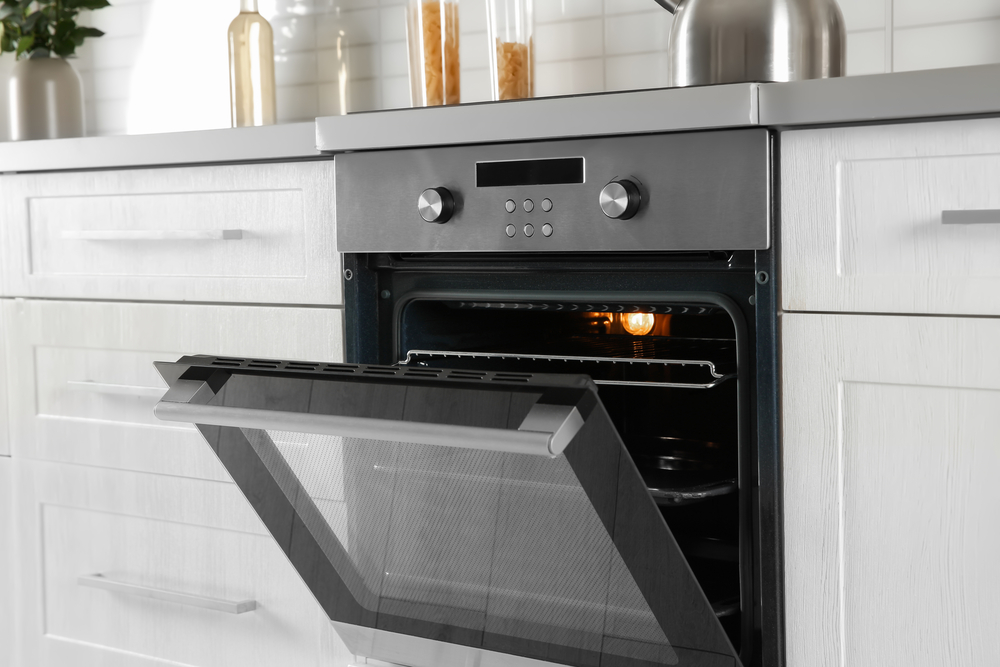
Image Source: www.electricrate.com
How Many Amps Does An Oven Use Essential Guide Explained
How many amps does an oven use? Most electric ovens and ranges use between 20 and 50 amps. The exact number depends on the oven’s size, features, and power. This need for high amps means ovens require a special circuit breaker. This circuit breaker must be big enough to handle the oven’s power without tripping. The amperage rating for an electric range or oven is a key number. It tells you how much electricity the appliance needs to work safely. The standard oven amp draw is often 30 to 50 amps, but it varies.
Grasping Electrical Terms Simply
Think of electricity like water flowing in a pipe.
* Volts (V) are like the water pressure. It pushes the water. US homes usually have 120V and 240V. Big appliances like ovens use 240V. This higher pressure moves more power.
* Amps (A) are like how much water flows through the pipe at one time. This is the ‘flow rate’. A high-amp appliance needs a big ‘pipe’ for a lot of ‘flow’.
* Watts (W) are like the total work the water does, maybe turning a water wheel. Watts are the total power an appliance uses. Ovens use a lot of watts to make heat.
* Ohms (Ω) are like how narrow the pipe is, resisting the water flow. In electricity, it’s resistance.
Amps, volts, and watts are linked. More watts mean more amps are needed if the voltage stays the same. An oven needs a certain ‘flow’ (amps) at a certain ‘pressure’ (volts) to create enough ‘work’ (watts) to bake your food.
Why Amps Matter for Ovens
Amps matter a lot for safety. Appliances need a path for electricity. This path includes wires and a switch at your home’s main electric panel. This switch is a circuit breaker.
A circuit breaker is a safety device. Think of it as a guard. It watches the electricity flow (amps). If too much flow goes through the wires, the breaker trips. This stops the flow. It turns the power off. This keeps the wires from getting too hot. Hot wires can cause fires.
Every appliance that uses a lot of power needs a breaker sized just right for it. Ovens use a lot of power. They need a big breaker and thick wires. Using a breaker that is too small is dangerous. It will trip often. Using a breaker that is too big is even more dangerous. It might not trip when there is too much power. This can cause wires to overheat and start a fire. The circuit breaker size oven installation needs to match the oven’s needs.
Fathoming Oven Power Needs
Ovens use power to heat up. The heating elements (coils or hidden elements) turn electric power into heat. The amount of heat needed depends on the oven’s size and how fast you want it to heat up. More heat, or faster heating, means more power is used. This means more watts. More watts means more amps are needed at 240V.
The power consumption electric oven is measured in watts. A typical electric oven might use anywhere from 2,000 watts to 5,000 watts or even more, especially when using the broil element or self-cleaning function. This high power use is why they need a lot of amps.
Typical Amp Needs for Ovens
Most standalone electric ovens and ranges use 240 volts. This higher voltage helps them use less current (amps) for the same amount of power (watts) compared to using 120 volts.
Here are common amp needs:
* Standard Electric Range (with oven and cooktop): These typically require a 50 amp circuit breaker. The electric range amp requirement includes power for the oven and all the cooktop burners. They often use thick wires, like 6-gauge wire.
* Single Electric Wall Oven: These usually need a 30 amp circuit breaker. Some smaller or less powerful models might need 20 amps. Some larger or more powerful ones might need 40 amps.
* Double Electric Wall Oven: These need more power because they have two ovens. They often require a 40 amp circuit breaker. Some might need up to 50 amps depending on features.
* Built-in Oven (without cooktop): This is often the same as a single wall oven, usually needing 20-40 amps, most commonly 30 amps.
The 240V oven amperage is based on its total wattage. You can find this wattage on the oven’s rating plate. This plate is usually on the back, side, or door frame of the appliance.
Deciphering Oven Wattage and Amp Conversion
Appliances often list their power in watts (W) or kilowatts (kW). One kW is 1000 watts. You can figure out the amps needed if you know the wattage and the voltage.
The simple formula is:
Amps (A) = Watts (W) / Volts (V)
Most electric ovens use 240 Volts.
Let’s look at examples:
| Appliance Type | Typical Wattage | Voltage | Amps Needed (Calculated) | Minimum Circuit Breaker Size (125% Rule) | Common Breaker Size Installed |
|---|---|---|---|---|---|
| Small Wall Oven | 3,000 W | 240 V | 3000 / 240 = 12.5 A | 12.5 A * 1.25 = 15.625 A | 20 A |
| Standard Wall Oven | 4,000 W | 240 V | 4000 / 240 = 16.67 A | 16.67 A * 1.25 = 20.84 A | 20 A or 30 A (Often 30 A for extra safety/features) |
| Larger Wall Oven | 5,000 W | 240 V | 5000 / 240 = 20.83 A | 20.83 A * 1.25 = 26.04 A | 30 A |
| Double Wall Oven | 6,000 W | 240 V | 6000 / 240 = 25 A | 25 A * 1.25 = 31.25 A | 40 A |
| Double Wall Oven (High Power) | 7,500 W | 240 V | 7500 / 240 = 31.25 A | 31.25 A * 1.25 = 39.06 A | 40 A or 50 A |
| Standard Electric Range | 8,000 W | 240 V | 8000 / 240 = 33.33 A | 33.33 A * 1.25 = 41.66 A | 40 A or 50 A (Often 50 A) |
| Large Electric Range | 10,000 W | 240 V | 10000 / 240 = 41.67 A | 41.67 A * 1.25 = 52.08 A | 50 A |
| Range with High-Power Burners | 12,000 W+ | 240 V | 12000 / 240 = 50 A | 50 A * 1.25 = 62.5 A | 60 A (Check manual) |
This table shows the oven wattage amps conversion. The calculated amps are what the oven uses when running at full power (like during preheating or broiling). Electric ranges use power for both the oven and the cooktop burners. The total amp draw for a range can be high when many burners and the oven are on.
Interpreting the 125% Rule for Safety
You might see in the table that the minimum breaker size is larger than the calculated amps. This is because of a safety rule. For appliances that run for a long time (like ovens), electrical codes require the circuit breaker to be at least 125% of the appliance’s rated current. This is called the 125% rule.
Why 125%? It adds a safety margin. It makes sure the wires and breaker do not get too hot when the appliance is used for long periods. The breaker must be the next standard size above the calculated 125% value. Standard breaker sizes are 15, 20, 30, 40, 50, 60 amps, and so on.
Example: An oven draws 25 amps.
* Calculate 125%: 25 amps * 1.25 = 31.25 amps.
* Find the next standard breaker size above 31.25 amps. The next size is 40 amps.
* So, a 25-amp oven would need a 40-amp circuit breaker.
This is why a 25-amp double oven might need a 40 amp breaker, as seen in the table. A standard electric range drawing 33.33 amps at full load needs 33.33 A * 1.25 = 41.66 A. The next standard size is 50 amps. This explains why a standard oven amp draw combined with cooktop elements often requires a 50 amp circuit.
Comprhending Oven Power Usage Over Time (kWh)
The oven power usage kWh (kilowatt-hours) tells you how much electricity the oven uses over time. This is what you pay for on your electric bill.
- Watts (W) is how much power it uses right now.
- Kilowatts (kW) is Watts divided by 1000 (for easier numbers).
- Kilowatt-hours (kWh) is kW multiplied by the number of hours the appliance runs.
Example: An oven uses 4000 watts (4 kW).
* If it runs for 1 hour at full power, it uses 4 kW * 1 hour = 4 kWh.
* If it runs for 30 minutes (0.5 hours), it uses 4 kW * 0.5 hours = 2 kWh.
An oven does not run at full power all the time. It cycles on and off to keep the temperature steady. So, its average oven power consumption is lower than its maximum wattage might suggest.
Factors affecting kWh use:
* How often you use the oven.
* How long you cook each time.
* The temperature you set. Higher temps use more power.
* Using features like convection or self-cleaning (these use more power).
* The oven’s efficiency (how well it keeps heat inside).
Tracking oven power usage kWh helps you understand energy costs. While amps are about the needed electrical circuit size and safety, kWh is about energy use and cost.
The Need for a Dedicated Oven Circuit
An oven uses a lot of power. It must have its own circuit. This means it needs its own wire run from the electric panel to the oven location. It must also have its own circuit breaker. This is called a oven circuit breaker dedicated circuit.
Why a dedicated circuit?
1. Safety: An oven drawing 30 to 50 amps is a huge load. If it shared a circuit with other appliances (like lights, toaster, microwave), the total amp draw could easily go over the breaker’s limit. This would cause the breaker to trip constantly. Or worse, if the breaker was oversized unsafely, it could lead to overheating and fire.
2. Reliability: Appliances on a shared, overloaded circuit might not work right. Lights might dim when the oven turns on. Other appliances might trip the breaker.
3. Code Requirements: Electrical safety codes (like the National Electrical Code in the US) require large appliances like ovens and ranges to be on dedicated circuits.
The wire size for a dedicated oven circuit must also be right for the breaker size. Thicker wires (like 6-gauge for 50 amps or 8-gauge for 40 amps) are needed for higher amp circuits. Thicker wires can handle more current without getting hot.
Inspecting the Oven’s Amperage Rating
Every electric appliance has a rating plate or sticker. This plate shows important information. It will list:
* The manufacturer and model number.
* The serial number.
* The voltage it needs (usually 240V for ovens).
* The total wattage (W) or kilowatts (kW).
* Sometimes, it directly states the required amperage or minimum circuit size.
This is the amperage rating electric range or oven. Always check this plate before installing or replacing an oven. This rating tells you what size breaker and wire you need. Do not guess the required circuit size. Always check the appliance’s rating plate and the installation manual.
Where to find the rating plate:
* On the back of the oven or range.
* On the side frame of the oven opening (for wall ovens).
* On the inside of the oven door frame.
* Behind the storage drawer at the bottom of a range.
* In the owner’s manual or installation guide.
Different Oven Types and Their Amps
Not all ovens are the same. Their design affects how much power they need.
- Electric vs Gas Ovens: Gas ovens use gas for heat. They still need a small amount of electricity. This electricity powers the clock, lights, electronic controls, and the igniter. They usually plug into a standard 120V outlet. They need very few amps, often less than 1 amp. They do not need a dedicated high-amp circuit.
- Freestanding vs Wall Ovens: A freestanding range includes an oven and a cooktop. These appliances use power for both parts. This is why they typically need a 50 amp circuit. A wall oven is just the oven part. It does not have a cooktop built-in. Wall ovens need circuits sized for the oven only (often 20-40 amps).
- Single vs Double Ovens: A double wall oven has two oven cavities. It can cook two things at different temperatures at the same time. Running two ovens uses more power than running one. This is why double ovens often need a larger circuit (40 or 50 amps) than single ovens (20 or 30 amps).
Features also play a role. Ovens with self-cleaning cycles use a lot of heat, demanding higher power (and amps) during that cycle. Convection fans add a small load. Fancy electronic controls add a tiny load. The main power draw is always the heating elements.
What Happens with the Wrong Circuit Size?
Putting an oven on a circuit that is too small is risky.
* Frequent Tripping: The breaker will trip often. This happens when the oven draws more amps than the breaker is rated for. It might trip during preheating or when using multiple elements. This is annoying, but the breaker is doing its job to prevent fire.
* Overheating Wires: If someone uses a breaker that is too large for the wire size, the wires can overheat before the breaker trips. This can melt the wire insulation. Melted wires can touch, causing short circuits. This is a major fire hazard.
* Appliance Damage: Constant power interruptions from a tripping breaker can stress the oven’s electronics. It might cause the oven to break sooner.
It is essential to match the breaker size, wire size, and oven’s amperage rating correctly. Using the wrong parts is dangerous and against electrical codes.
Checking Your Oven’s Data Plate
Before you buy a new oven or if you move into a home with an existing one, find the data plate. Note down the voltage and wattage or amperage requirement. This is the first step to make sure your home has the right circuit.
If you are replacing an old oven, check the data plate on the old one and the new one. New ovens, especially with more features, might need a larger circuit than older models. You might need to upgrade your wiring and circuit breaker.
If you plan to install an electric range amp requirement check both the oven part and the cooktop part specs. The total wattage for a range includes all heating elements.
Installation Steps and Safety
Installing an electric oven or range involves high voltage and high amperage wiring. This can be very dangerous if you do not know what you are doing.
Steps usually involve:
1. Turning off power at the main breaker panel. Double-check it is off!
2. Running a new, properly sized wire from the panel to the oven location (if a circuit does not exist or is too small). This is often thick, stiff wire.
3. Installing a new, correctly sized circuit breaker in the panel. This is a oven circuit breaker dedicated to the oven.
4. Installing a proper outlet or junction box at the oven location. For ranges, this is often a 3-prong or 4-prong outlet.
5. Connecting the oven’s power cord or wires to the outlet or junction box.
6. Sliding the oven or range into place.
7. Turning the power back on at the panel.
8. Testing the oven.
Because of the risks, it is highly recommended to hire a qualified electrician to install a new electric oven or range. They know the codes. They have the right tools. They can do the job safely. They will make sure the circuit breaker size oven installation is correct for the specific oven.
Key Takeaways on Oven Amps
- Electric ovens and ranges use a lot of power (watts).
- This power use requires a high electrical ‘flow’ (amps).
- Most operate at 240V.
- Standard electric ranges often need a 50 amp circuit.
- Single wall ovens often need 20-40 amps (commonly 30 amps).
- Double wall ovens often need 40-50 amps.
- Gas ovens need very few amps (less than 1 amp) on a 120V circuit.
- The exact amps needed depends on the oven’s wattage.
- You can convert watts to amps: Amps = Watts / Volts.
- Circuit breakers must be sized at least 125% of the oven’s maximum amp draw for safety.
- Ovens must be on a dedicated circuit with the right breaker and wire size.
- Check the oven’s rating plate for its exact amperage or wattage needs.
- Hiring a qualified electrician for installation is the safest choice.
Knowing the amperage rating electric range or oven is vital for safe and proper installation. It prevents tripping breakers and, more importantly, prevents fire hazards. It ensures the appliance works as it should.
Calculating Real-World Amp Draw
While the rating plate gives the maximum amp draw, an oven’s actual amp use changes during cooking.
* Preheating: The oven uses maximum power (highest amp draw) to get to the set temperature quickly.
* Maintaining Temperature: Once the oven is hot, the heating elements cycle on and off. The average amp draw is much lower than the maximum.
* Broiling: The broil element uses high power, leading to a high amp draw when on.
* Self-Cleaning: This uses very high heat, so the amp draw is high during this cycle.
* Electric Range Use: If using the cooktop burners and the oven at the same time, the total amp draw can be close to the maximum rated load for the entire appliance.
The standard oven amp draw often refers to the maximum draw listed on the plate. This is the number used to size the circuit and breaker. The average oven power consumption over a cooking cycle or longer time is lower and relates more to energy costs (kWh).
Old vs. New Ovens
If you have an older home or an older oven, it’s a good idea to check the circuit. Older circuits might not meet today’s safety standards. The wiring might be old or the breaker size might be wrong.
Replacing an old oven with a new one might require electrical work. New ovens often have more features (like convection, faster preheating, self-cleaning) that can mean higher wattage and thus higher amp needs.
Always check the electric range amp requirement or oven amp requirement of the new appliance. Never assume it is the same as the old one.
Confirming Your Home’s Electrical Panel
Before buying a high-amp oven, check your home’s electric panel.
* Is there an existing circuit for the oven?
* What size is the breaker?
* What gauge is the wire?
* Do you have space in the panel for a new, larger breaker if needed?
A qualified electrician can inspect your panel and existing wiring. They can tell you if your home’s electrical system can handle the new oven or if upgrades are necessary. This prevents problems after you buy the oven. It ensures the circuit breaker size oven installation will be done right.
Energy Efficiency and Amps
Energy-efficient ovens don’t necessarily use fewer amps when they are on. Their maximum wattage (and thus maximum amp draw) might be similar to less efficient models.
However, efficient ovens might:
* Reach the set temperature faster (shorter high-amp preheating).
* Hold heat better (elements cycle on less often).
* Cook faster (like convection ovens).
These factors can reduce the total time the oven spends using high power. This lowers the oven power usage kWh over time, saving energy and money on your electric bill. It affects the average oven power consumption, not the maximum amp draw used for circuit sizing.
The power consumption electric oven is highest during specific phases. Understanding this helps manage energy use. But for electrical safety and installation, focus on the maximum amp draw and the required circuit size.
Grasping the Wire Gauge
Wire size is as important as the breaker size. Wire is measured by gauge. A lower gauge number means a thicker wire.
* 14-gauge wire is used for 15 amp circuits (lights, small outlets).
* 12-gauge wire is used for 20 amp circuits (kitchen outlets, bathrooms).
* 10-gauge wire is used for 30 amp circuits (clothes dryers, water heaters).
* 8-gauge wire is used for 40 amp circuits.
* 6-gauge wire is used for 50 amp circuits (most electric ranges).
Using wire that is too thin for the breaker size is dangerous. The breaker allows too much current for the wire to handle safely. The wire will overheat. Always match the wire gauge to the breaker size required by the oven’s amperage rating electric range or oven.
Checking Your Outlet (for Ranges)
Electric ranges often use a special outlet. There are two types:
* 3-prong outlets: Used in older homes. These provide 240V but do not have a separate ground wire. The neutral and ground are combined. These are less safe than 4-prong outlets. Code now requires 4-prong.
* 4-prong outlets: Used in newer homes and for new installations. These provide 240V and have a separate ground wire. This is safer.
If your new range comes with a 4-prong cord but your home has a 3-prong outlet (or vice versa), you will need to change either the cord or the outlet. It is best to upgrade to the safer 4-prong outlet and wiring (which requires running a new wire with a ground). Again, this is a job for an electrician. The connection type relates to the electric range amp requirement circuit.
Summary Table of Common Amp Needs
| Appliance Type | Typical Voltage | Typical Max Wattage | Typical Amps (Calculated) | Minimum Circuit Breaker Size | Common Breaker Size | Wire Gauge (Copper) |
|---|---|---|---|---|---|---|
| Gas Range/Oven (controls only) | 120 V | 100 W – 200 W | < 2 A | 15 A | 15 A or 20 A | 14 Gauge |
| Single Electric Wall Oven | 240 V | 3,000 W – 5,000 W | 12.5 A – 20.8 A | 20 A – 26 A | 20 A or 30 A | 12 or 10 Gauge |
| Double Electric Wall Oven | 240 V | 6,000 W – 7,500 W | 25 A – 31.25 A | 32 A – 39 A | 40 A | 8 Gauge |
| Standard Electric Range (Oven+Cooktop) | 240 V | 8,000 W – 10,000 W | 33.3 A – 41.7 A | 42 A – 52 A | 40 A or 50 A | 8 or 6 Gauge |
| High Power Electric Range | 240 V | 10,000 W – 15,000 W | 41.7 A – 62.5 A | 52 A – 78 A | 50 A or 60 A | 6 Gauge (check manual) |
Remember, these are typical numbers. Always check the specific appliance’s rating plate. The amperage rating electric range or oven shown there is the number to trust.
Frequently Asked Questions
Q: Can I use a smaller breaker than the oven needs?
A: No. Using a smaller breaker will cause it to trip often. It might also prevent the oven from working correctly. It does not meet safety codes.
Q: Can I use a bigger breaker than the oven needs?
A: No. This is very dangerous. If the breaker is too big for the wire size, the wire can overheat and start a fire before the breaker trips during an overload. Always match the breaker size to the wire and the appliance’s needs following the 125% rule.
Q: What size wire do I need for a 50 amp oven breaker?
A: You typically need 6-gauge copper wire for a 50 amp circuit. Always check local electrical codes and the oven manual.
Q: Does a gas oven need a dedicated high-amp circuit?
A: No. Gas ovens use electricity only for controls and ignition. They plug into a standard 120V outlet and use very few amps. They do not need a dedicated high-amp circuit.
Q: My oven breaker trips sometimes. What is wrong?
A: The breaker is likely tripping because the oven is drawing too many amps for the circuit size. This can happen if the circuit is too small for the oven, or if there is a problem with the oven itself causing it to draw too much power. Have an electrician check the circuit size and the oven.
Q: Where is the amperage rating on my oven?
A: Look for a metal plate or sticker on the back, side, or door frame of the oven. It should list voltage, wattage, and sometimes the required amperage or minimum circuit size.
Q: What is the difference between power consumption (kWh) and amp draw?
A: Amp draw is the rate of electrical current flow at any given moment (like flow rate in a pipe). Power consumption in kWh is the total energy used over time (like total water used). Amps determine the required circuit size for safety. kWh determines how much you pay for electricity.
Q: Does self-cleaning use more amps?
A: Yes. The self-cleaning cycle uses very high heat. This requires the heating elements to use a lot of power, leading to a higher amp draw during that cycle compared to baking.
Q: Can I install the oven circuit myself?
A: Installing a 240V, high-amp circuit is complex and dangerous. It requires knowledge of electrical codes, wire sizing, and safety practices. It is strongly recommended to hire a qualified electrician to install the oven circuit breaker dedicated wiring.
Knowing how many amps your oven uses and why it matters helps ensure safety and proper function. Always refer to your specific oven’s manual and rating plate for accurate information. When in doubt, call a professional electrician.