
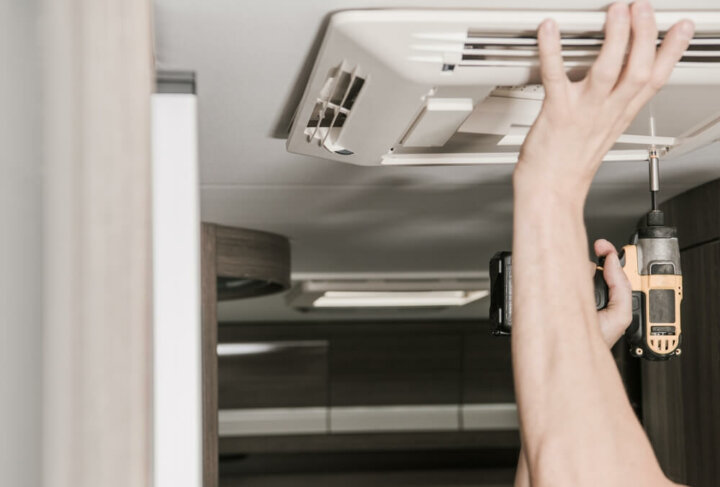
Image Source: www.jeffsetter.com
Learn Exactly How To Recharge A Rv Air Conditioner Safely
Can I add Freon to my RV AC? Adding refrigerant, often called Freon, to an RV air conditioner is possible, but it’s a job that needs care, the right tools, and knowledge. RV air conditioners are sealed systems. If the cooling is not working, it usually means the system has a leak and is low on refrigerant. Just adding more refrigerant without fixing the leak is only a temporary fix. It can even harm the unit or the environment. This guide will help you learn how to safely find out if your RV AC needs refrigerant and how to add it if you must, focusing on safety and correct steps.
When Your RV AC Needs Attention
Your RV’s air conditioner keeps you cool and happy on trips. When it stops working right, your travels can become uncomfortable. You might notice your RV AC blowing warm air. This is a common sign something is wrong. Or maybe your RV rooftop unit not cooling at all. These issues point to a problem with the cooling system.
Symptoms of a low refrigerant level can include:
- Air coming from the vents feels cool, but not cold.
- The unit runs for a long time but does not cool the RV much.
- You might see ice or frost on the coils inside the unit.
- The compressor runs, but the air is warm (RV AC blowing warm air).
- The entire RV rooftop unit not cooling effectively.
If you see these signs, your RV AC might be low on refrigerant. This loss of refrigerant almost always means there is a leak somewhere in the system.
Why Recharging Might Be Needed
An RV air conditioner works by moving heat. Refrigerant inside the system helps do this. It cycles through coils, changing from a liquid to a gas and back again. This process pulls heat from inside your RV and releases it outside.
The system is sealed. Refrigerant should never run out. If it is low, it means it has leaked out. Common places for leaks include:
- Fittings and connections in the pipes.
- Seals where pipes connect to parts like the compressor or coils.
- Small holes in the metal coils themselves.
- Damage to the service ports (like the Schrader valve RV AC).
If you just add refrigerant without fixing the leak, it will leak out again. The unit will stop cooling again soon. Fixing the leak is the most important step before adding refrigerant.
Grasping the Basics of RV AC Refrigerant
Before you do anything, you need to know the RV AC refrigerant type your unit uses. This information is key. Using the wrong type can damage your system and cause problems.
Most RV air conditioners use R-410A refrigerant. Older units might use R-22. R-22 is being phased out because it harms the ozone layer. It’s harder to find now. It also costs more.
You can find the correct RV AC refrigerant type on a sticker on the AC unit itself. It might be near the compressor or on the data plate. Always check this sticker. Never guess.
- R-410A: This is the most common type in newer RVs. It needs specific tools and handling because of its pressure.
- R-22: Found in older units. Needs different tools than R-410A. Handling R-22 needs special care due to environmental rules.
Using R-410A in a system designed for R-22 will not work. It will likely cause damage. The same is true the other way around. Know your RV AC refrigerant type first.
Safety First!
Working with refrigerant and AC systems can be risky. Pressurized gas is dangerous. You need to follow strict safety rules.
- Wear Safety Glasses: Refrigerant can freeze your eyes instantly if it gets in them. Always wear safety glasses or a face shield.
- Wear Gloves: Wear thick gloves, like leather or special AC gloves. Refrigerant can cause frostbite on skin.
- Work in a Well-Ventilated Area: Refrigerant can push oxygen out of the air. This is especially true in small spaces. Work outside or in a place with lots of fresh air.
- Keep Away from Heat and Flames: Refrigerant can break down into harmful gases when heated. Do not smoke or use open flames nearby.
- Manage Pressure: AC systems have high pressure. Use tools designed for these pressures. Never overfill the system.
- Handle Refrigerant Canisters Carefully: Refrigerant is stored under pressure. Do not drop or damage the cans.
- Know Your Limits: If you are not comfortable or sure about a step, stop. Call a professional RV AC technician.
Ignoring safety steps can lead to serious injury or death. Always put safety first.
Tools and Materials You’ll Need
You need special tools to work on an RV AC system. You cannot just pour refrigerant in. Here is a list of needed items:
- Manifold Gauge Set: This is a must-have. It has two gauges and hoses. One gauge shows low side pressure (usually blue). The other shows high side pressure (usually red). The hoses connect to the AC system and the refrigerant source. You need a set made for your specific RV AC refrigerant type (R-410A or R-22).
- What it does: Allows you to check RV AC pressure in the system. Helps you know if it’s low. Helps you add the right amount of refrigerant.
- Vacuum Pump RV AC: After fixing a leak, you must pull all air and moisture out of the system. A vacuum pump does this. Moisture in the system can freeze and cause damage. Air prevents the system from cooling well.
- What it does: Removes air and moisture. Creates a vacuum before adding refrigerant.
- Refrigerant: You need the correct RV AC refrigerant type. Buy a small can or cylinder. Make sure it has a standard service port fitting.
- Refrigerant Scale (Optional but Recommended): This helps you add the exact amount of refrigerant needed. Adding too much or too little is bad.
- RV AC Leak Detection Tools: You need a way to find the leak.
- Bubble Solution: Special liquid that bubbles where refrigerant leaks.
- Electronic Leak Detector: A tool that senses refrigerant gas. More accurate but costs more.
- UV Dye Kit: Add a special dye to the system. Use a UV light later to see where it leaks.
- Service Hoses: These come with the manifold gauge set but make sure they are long enough and rated for the pressure.
- Schrader Valve Core Remover/Installer: A tool to remove and replace the small valve core inside the service ports.
- Wrenches and Pliers: To connect and disconnect hoses.
- Safety Gear: Glasses, gloves (mentioned before).
- Temperature Probe (Optional): To check the temperature of the air coming out of the vent.
Using the right tools is key to doing the job safely and correctly. Do not try to skip steps or use incorrect tools.
| Tool Name | Purpose | Notes |
|---|---|---|
| Manifold Gauge Set | Check system pressure, Add refrigerant | Must match RV AC refrigerant type (R-410A or R-22) |
| Vacuum Pump RV AC | Remove air/moisture from system | Needed after fixing leaks |
| Correct Refrigerant Type | The cooling agent | Check unit sticker for RV AC refrigerant type |
| Refrigerant Scale | Measure refrigerant amount | Helps add exact charge |
| RV AC Leak Detection tools | Find where refrigerant is escaping | Bubble solution, electronic detector, UV dye |
| Safety Glasses | Protect eyes | Essential safety gear |
| Protective Gloves | Protect hands from cold | Essential safety gear |
| Schrader Valve Tool | Work with valve cores in service ports | Needed to access system for charging/vacuuming |
Finding the Issue
Before adding refrigerant, you must find and fix the leak. Refrigerant leaks can be small and hard to see. This is where your RV AC leak detection tools come in.
- Visual Inspection: Look closely at all visible parts of the AC system. Check connections, fittings, and coils for oily residue. Refrigerant oil often leaks out with the gas. An oily spot can show where the leak is.
- Bubble Solution: With the AC unit off, spray or brush bubble solution on joints, fittings, and service ports. Turn the AC on (if possible and safe to do so, or add a trace amount of pressure using nitrogen if the system is empty – be very careful). Watch for bubbles forming. Bubbles mean gas is leaking out. This is a simple and effective RV AC leak detection method for larger leaks.
- Electronic Leak Detector: Turn on the electronic detector. Slowly move the sensor probe along pipes, fittings, and coils. The detector will beep or flash when it senses refrigerant gas. This tool can find very small leaks.
- UV Dye: If other methods fail, you can add a special UV dye to the system (follow product instructions carefully). Run the AC for a while to let the dye mix and travel. Then, use a UV light to look for glowing spots around the system. This shows the leak point.
Once you find the leak, you must fix it. This might mean tightening a fitting, replacing a seal (like an O-ring), or repairing a damaged line or coil. Some repairs, like fixing a coil, are complex and might need a professional. Do not add refrigerant to a system that still has a leak. It is wasteful and bad for the environment.
Prepping the System
After fixing the leak (or if the system is completely empty because of a very large leak you fixed), you need to prepare the system before adding refrigerant. This involves using the vacuum pump RV AC.
Why vacuum the system?
- Remove Air: Air contains moisture. Air in the system takes up space the refrigerant needs. It also stops the system from cooling well.
- Remove Moisture: Water in the system is very bad. It can mix with refrigerant to form acid, which eats away at parts. It can also freeze in the system, blocking flow.
- Test for Leaks (Again): Pulling a deep vacuum and seeing if the system holds that vacuum is a good way to check if your leak fix worked.
Steps to vacuum the system:
- Connect your manifold gauge set hoses. The low side hose (usually blue) connects to the low side service port on your RV AC. The high side hose (usually red) connects to the high side service port. The yellow (service) hose connects to your vacuum pump RV AC.
- Make sure the valves on the manifold gauge set are closed.
- Start the vacuum pump RV AC.
- Open both the high side and low side valves on the manifold gauge set.
- Watch the gauges. The needles should drop deep into the vacuum range (below zero psi, into inches of mercury vacuum). Aim for at least 500 microns (a very deep vacuum). Most pumps have gauges showing this, or you can use a separate micron gauge for best results.
- Let the vacuum pump run for at least 15-30 minutes, or longer for a large or wet system. This pulls out all air and moisture.
- Once the desired vacuum is reached, close both the high side and low side valves on the manifold gauge set.
- Turn off the vacuum pump RV AC.
- Watch the gauges for 15-30 minutes. If the needles rise back towards zero, you still have a leak somewhere. You must find and fix it before adding refrigerant. If the vacuum holds, the system is sealed and ready for charging.
This vacuum process is critical. Do not skip it. A good vacuum ensures your AC will cool properly and helps prevent future problems.
The Charging Process
Now the system is leak-free and under vacuum. It is time to add refrigerant. This requires using your manifold gauge set and the correct RV AC refrigerant type. You will add refrigerant through one of the service ports, typically the low side. These ports usually have a Schrader valve RV AC inside them, like a tire valve.
Steps to add refrigerant:
- Connect the yellow hose from your manifold gauge set to the correct RV AC refrigerant type can or cylinder. Use the right adapter if needed.
- With the AC system still under vacuum (gauges should show vacuum), briefly open the valve on the manifold gauge set for the side you will add refrigerant to (usually the low side valve). This lets refrigerant flow from the can into the hose and push out any air in the hose. This is called purging the hose. Do this quickly.
- Close the valve on the manifold gauge set.
- Open the valve on the refrigerant can or cylinder.
- Start the RV AC unit. Set it to cool on the lowest temperature setting and highest fan speed. The compressor must be running to pull refrigerant into the system.
- Slowly open the low side valve on your manifold gauge set. Refrigerant will start to flow into the system.
- Watch the low side pressure gauge (usually blue). You are adding refrigerant based on pressure and temperature. You need a pressure chart for your specific RV AC refrigerant type (R-410A or R-22) that relates pressure to the outside air temperature.
- Add refrigerant a little bit at a time. Let the system run for a few minutes after each addition to let the pressure settle.
- Check RV AC pressure on the low side gauge. Compare it to the chart for the current outside temperature. You are aiming for the target low side pressure listed on the chart. The high side pressure will also rise. Watch both gauges.
- Also feel the large suction line (low side) coming out of the AC unit. It should feel cold and maybe have a light layer of sweat or condensation. Do not let it freeze over completely.
- If using a scale, add the exact amount of refrigerant specified on your unit’s data plate if the system was empty. If just topping off, use pressure and temperature charts. It’s easy to add too much. Adding too much (overcharging) is bad. It makes the system work harder and cool less effectively. It can also damage the compressor.
- Once the check RV AC pressure on the low side is correct according to the temperature chart and the air coming out feels cold, close the low side valve on the manifold gauge set.
- Turn off the refrigerant can valve.
- Let the system run for 10-15 minutes. Check RV AC pressure again. Check the temperature of the air coming out. It should be significantly colder than the air going in (a difference of 15-20 degrees Fahrenheit is typical).
- Once satisfied, close the valves on the manifold gauge set completely.
- Quickly and carefully disconnect the hoses from the service ports and the refrigerant can. Some refrigerant will escape – this is normal. Be ready for it and keep hands and face clear.
Understanding the Schrader valve RV AC is important. This is the small valve inside the service port that allows connection to the sealed system. When you connect the manifold gauge hose, the connector pushes the valve pin in, allowing flow. When you disconnect, the valve should seal, keeping the refrigerant in. If it leaks, you might need to replace the valve core using a special tool.
Adding refrigerant should only be done after fixing a leak and pulling a vacuum. Simply trying to add Freon RV air conditioner without these steps will likely not fix the problem and could cause more issues.
After Charging
You have added the correct RV AC refrigerant type. The air feels cold. The check RV AC pressure readings look good. Now what?
- Test Thoroughly: Let the RV AC unit run for a longer period (30-60 minutes). Make sure it maintains cold air output. Check that the RV rooftop unit not cooling problem is solved. Listen for strange noises.
- Check for New Leaks: Even though you fixed the main leak, check the service ports and where you connected hoses again for any small leaks using bubble solution.
- Insulate Service Ports: Some service ports have caps that also help seal them. Make sure these are put back on tightly.
- Monitor Performance: Over the next few days or weeks, pay attention to the AC. Does it still cool well? If the RV AC blowing warm air symptom returns, you still have a leak somewhere that wasn’t found or fixed completely.
- Clean Up: Safely disconnect all tools. Store refrigerant properly. Clean up any spills.
If you used UV dye for leak detection, you might need to run the system for a while before checking again with the UV light to see if the original leak fix is holding or if there are new leaks from the charging process.
When to Call a Pro
Recharging an RV AC can be a complex task. It needs special tools and handling of pressurized, potentially harmful substances. There are times when it is best to call a qualified HVAC technician who works on RVs.
- You Cannot Find the Leak: If you have tried RV AC leak detection and cannot find where the refrigerant is escaping, a professional has more advanced tools and experience.
- The Leak is Hard to Fix: Leaks in coils or inside sealed components often need welding or part replacement. This is not a DIY job for most people.
- You Don’t Have the Right Tools: Buying a manifold gauge set, vacuum pump RV AC, and other tools is expensive if you only need them once.
- You Are Not Comfortable: If you feel unsure or nervous about any part of the process, especially working with pressurized refrigerant, do not risk it.
- The Problem Isn’t Just Low Refrigerant: Sometimes, RV AC blowing warm air is not because of low refrigerant. It could be a bad fan motor, a faulty capacitor, a tripped breaker, or a problem with the control board. A technician can diagnose these issues.
- High Side Pressure Issues: While you check RV AC pressure on both sides, problems with high side pressure can be more complex to diagnose. A pro can interpret the readings correctly.
- After Trying and Failing: If you followed all the steps and your RV rooftop unit not cooling still persists or quickly returns, a professional is needed.
Working with refrigerants requires training and certification in many areas. While specific rules for RV ACs might vary, understanding the risks and proper procedures is vital.
Frequently Asked Questions
Q: How do I know if my RV AC needs refrigerant?
A: Common signs are the RV AC blowing warm air instead of cold, or the RV rooftop unit not cooling effectively. You might also see ice on the cooling coils. A proper way to know is to check RV AC pressure using a manifold gauge set and compare it to temperature charts. Low pressure, especially low side pressure, suggests low refrigerant.
Q: What RV AC refrigerant type does my unit use?
A: Check the sticker on the outdoor part of your RV AC unit. It will list the specific refrigerant type, usually R-410A or R-22 (for older units). Always use the type listed.
Q: Can I just add refrigerant without fixing a leak?
A: No, this is not recommended. RV AC systems are sealed. If the refrigerant is low, there is a leak. Adding refrigerant without fixing the leak is a temporary fix, wastes refrigerant, and is bad for the environment. You must do RV AC leak detection and fix the leak first.
Q: What is a Schrader valve RV AC?
A: It’s a small valve, like the one in a car tire valve stem, located in the service ports of your RV AC system. It allows you to connect hoses to add or remove refrigerant and check pressure while keeping the system sealed when disconnected.
Q: Why do I need a vacuum pump RV AC?
A: After fixing a leak and opening the system, air and moisture get in. The vacuum pump pulls these out. This step, called evacuation, is needed to make sure the system works right and lasts longer. Moisture can cause damage.
Q: How do I use a manifold gauge set?
A: A manifold gauge set connects to the high and low side service ports on your AC. It shows the pressure in the system. It also has valves and a service hose to connect to a vacuum pump or refrigerant can. You use it to check RV AC pressure, pull a vacuum, and add refrigerant. You need one designed for your RV AC refrigerant type.
Q: Is adding Freon RV air conditioner myself legal?
A: Rules vary by location. In many places, buying certain refrigerants (like R-22) requires certification. Handling any refrigerant needs care due to environmental impact and safety. Be sure to know the rules where you live.
Q: What is the correct RV AC low side pressure?
A: The correct pressure depends on the specific RV AC refrigerant type and the outside air temperature. You must look at a pressure/temperature chart for your refrigerant. The low side pressure will be on the left gauge (usually blue) of your manifold gauge set.
Q: My RV AC blowing warm air, but I don’t see any leaks. What else could be wrong?
A: Low refrigerant from a small leak is possible, but other issues can cause warm air. This includes dirty coils, a bad fan motor, a failed capacitor, electrical problems, or a bad thermostat. If you can’t find a leak with RV AC leak detection tools, call a professional.
Q: How much refrigerant should I add?
A: If the system was empty, add the amount specified on the unit’s data plate (usually in ounces or pounds), using a scale. If just topping off after fixing a leak, add slowly while watching the low side pressure gauge and comparing it to the pressure/temperature chart for your RV AC refrigerant type. Do not guess. Do not overcharge.
Safely recharging your RV air conditioner is possible if you are careful, have the right tools (like a manifold gauge set and vacuum pump RV AC), know your RV AC refrigerant type, and follow proper steps. Always remember to find and fix leaks first (RV AC leak detection is key) and pull a vacuum before adding refrigerant. Pay close attention to safety and check RV AC pressure throughout the process, especially the RV AC low side pressure. If you’re ever unsure, or if your RV AC blowing warm air continues, calling a professional is the safest and best option.