
When your air conditioner isn’t cooling your home, you might find something unexpected: ice. Yes, your AC unit, designed to cool things down, can actually freeze up. Why is my AC freezing? This usually happens when the air flowing over the cold indoor coil (called the evaporator coil) is not enough, or the system has low refrigerant. Both issues make the coil get too cold, turning the moisture in the air into ice. This air conditioner ice buildup can stop your AC from working right. It creates a frozen AC unit. The evaporator coil frozen problem needs fixing so your AC works again and doesn’t get hurt.
Getting rid of this ice is key. But you need to do it the right way. Melting the ice wrong can cause more problems. This guide will show you how to safely melt ice on AC coil parts and help you with troubleshooting frozen AC issues. We will also talk about how to prevent AC freezing in the future.
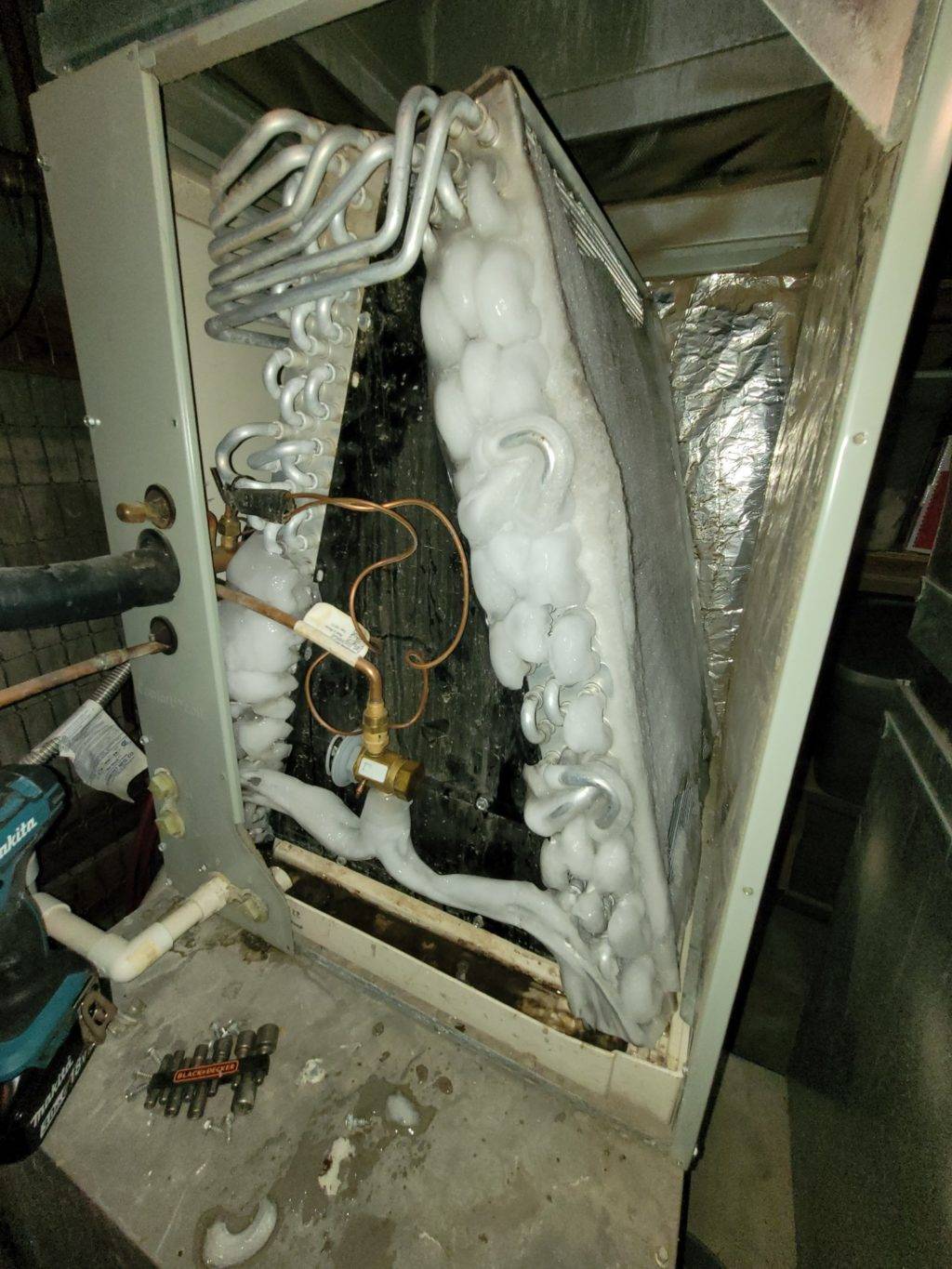
Image Source: www.manmadediy.com
Deciphering Why Your AC Freezes
It seems strange that something made to cool things down gets ice. But it happens a lot. Ice forms on the evaporator coil inside your home. This coil gets very cold to cool the air. If things aren’t right, the coil gets too cold. Then, water in the air turns into ice on the coil. This AC coil freezing up stops air from moving through it. Less cold air blows into your home. The AC not cooling ice problem gets worse.
Here are the main reasons your AC might freeze:
Grasping Airflow Problems
Air needs to move freely through your AC system. This air comes from your home, goes over the cold coil, and then blows back out. If not enough air moves, the coil gets colder and colder. It gets below freezing. This is a common reason for air conditioner ice buildup.
H5 Causes of Bad Airflow:
- Dirty Air Filter: This is the most common reason. A dirty filter blocks air. Think of trying to breathe through a thick cloth. Your AC struggles to pull air in.
- Blocked Vents: If supply vents in rooms are closed or blocked by furniture, less air goes back to the AC unit. This lowers airflow over the coil.
- Blocked Return Vents: Return vents pull air back to the AC. If they are blocked or too small, the system can’t get enough air.
- Weak Fan Motor: The fan inside your air handler blows air over the coil. If it’s weak or has a problem, it won’t move enough air.
- Blocked Ductwork: Stuff like dust, debris, or even pests can block the air paths (ducts) in your walls or ceiling.
Interpreting Low Refrigerant Issues
Refrigerant is the special liquid (or gas) in your AC that cools the air. The system is a closed loop. Refrigerant goes around and around. It picks up heat from inside and lets it go outside.
If your AC loses refrigerant, it means there is a leak. Low refrigerant makes the pressure drop in the system. This makes the evaporator coil get much colder than it should. Too cold equals ice. A frozen AC unit can often point to a refrigerant leak.
H5 Signs of Low Refrigerant:
- Hissing or Bubbling Sounds: These sounds can mean refrigerant is leaking out.
- AC Not Cooling Well: Even without ice, low refrigerant means less cooling power.
- Frozen Coil: Ice often forms near where the refrigerant enters the coil if levels are low.
Fathoming Dirty Coils
Both the indoor coil (evaporator) and the outdoor coil (condenser) need to be clean.
- Evaporator Coil: If the evaporator coil is covered in dirt and grime, air cannot flow over it easily. This is like the dirty filter problem. It blocks heat transfer and lowers airflow, leading to a frozen evaporator coil.
- Condenser Coil: The outdoor coil lets go of the heat from inside. If it’s dirty, the system can’t release heat well. This makes the whole system work harder. It can affect pressures and temperatures inside, sometimes leading to freezing, though less commonly than a dirty evaporator coil.
Running AC in Cold Weather
Air conditioners are made to work when it’s warm or hot outside. If the outside temperature is too low (usually below 60-65°F or 15-18°C), the pressure and temperature inside the AC system can drop too much. This causes the evaporator coil to get too cold and freeze.
Mechanical Troubles
Less common, but still possible, are problems with parts like:
- Thermostat: A bad thermostat might tell the AC to run constantly or set a temperature too low for conditions.
- Fan Motor Issues: As mentioned, if the fan motor is faulty or running slowly, it won’t move enough air.
- Expansion Valve: This part controls how much liquid refrigerant goes into the evaporator coil. If it gets stuck open, too much refrigerant can flood the coil, making it too cold.
Seeing the Signs of a Frozen AC
How do you know if your AC is frozen? Your AC not cooling ice problem might be obvious. Or the signs might be small at first. Knowing what to look for helps you stop the AC before it causes more damage.
Visible Ice
This is the clearest sign. You might see ice:
- On the Indoor Coil (Evaporator): Look inside the air handler unit. You might see white or clear ice covering the coil fins.
- On Refrigerant Lines: There are copper pipes connecting the indoor and outdoor units. The larger, insulated pipe is the “suction” line. It carries cold refrigerant vapor back to the outdoor unit. You might see ice on this line near the indoor or outdoor unit.
Warm Air from Vents
The AC’s main job is to blow cold air. If the coil is frozen, air can’t flow over it properly to get cooled. The air blowing from your vents might be room temperature, or just not as cold as it should be. This is the “AC not cooling ice” symptom.
Weak Airflow
Because the ice blocks the coil, less air can pass through it. The air coming out of your vents might feel weak compared to normal. You might not feel much air pushing out at all.
Odd Noises
A frozen coil can cause unusual sounds.
- Grinding or Squealing: This could be the fan hitting the ice buildup. Turn off the AC right away if you hear this!
- Hissing or Gurgling: These might point to a refrigerant leak, which caused the freezing.
Unit Runs All the Time
If your AC can’t cool the house because of ice, it will keep running and running. It tries to reach the temperature you set on the thermostat but can’t. This constant running uses a lot of power and puts strain on the system.
How to Defrost Your AC Safely: A Step-by-Step Guide
Finding a frozen AC unit can be worrying. But the first step is simple and safe: turn it off. Trying to run an AC with ice on it can hurt the compressor, a very costly part. Melting the ice safely takes time and patience. Here is how to melt ice on AC coil parts without causing damage.
Step 1: Turn Off the AC System
This is the most important step. You must stop the cooling process.
H5 What to Do:
- Go to the Thermostat: Change the system setting from “Cool” to “Off”.
- Turn Off Power at the Breaker: Find your home’s electrical panel. Find the breaker switch for your indoor and outdoor AC units (sometimes labeled “Furnace” or “Air Handler” and “Condenser”). Turn both of these off. This makes sure the system is completely shut down and safe to work around.
Why this is Important: Running the compressor while the coil is blocked with ice can cause it to overheat and fail. Turning the power off prevents any part from running unexpectedly while you wait for the ice to melt or work on the unit.
Step 2: Set to Fan Mode (AC Fan Mode Defrost)
Once the system is off at the breaker, you can use the thermostat’s fan setting.
H5 How to Do It:
- Go Back to the Thermostat: With the breaker off, you can usually turn the thermostat back on (it gets low-voltage power from the house system, not the high-voltage AC power).
- Set System to “Off”: Keep the main system setting on “Off”.
- Set Fan to “On” or “Continuous”: Find the fan setting. Change it from “Auto” to “On” or “Continuous”.
Why AC Fan Mode Defrost Helps: The fan inside your air handler blows air over the coil. By setting the fan to “On” while the cooling system is off, you are just moving regular room-temperature air over the frozen coil. This warm air helps the ice melt faster than just waiting with everything off.
Table: AC Settings for Defrosting
| Setting Name | What to Set It To | Purpose |
|---|---|---|
| System | Off | Stops the cooling process (compressor). |
| Fan | On (or Continuous) | Blows room air over coil to melt ice. |
Step 3: Allow Natural Defrosting
Now comes the waiting part. Melting the ice takes time. How long depends on how much ice there is, the temperature of your home, and how well the fan is blowing.
H5 Waiting Period:
- It can take anywhere from 2 to 24 hours for all the ice to melt.
- Keep the fan running during this time.
- Check the indoor unit periodically to see how the melting is going.
Why Patience is Key: Letting the ice melt naturally or with just the fan is the safest way. It prevents damage that forced melting might cause.
Step 4: Speeding Up Defrosting (Use with Caution)
While waiting is best, you might want to speed things up slightly if you are careful. Never use sharp objects to chip away ice. You could easily puncture the coil, causing a major refrigerant leak and expensive repair.
H5 Cautious Methods (Optional):
- Warm Water (Very Gentle): You can place pans or bowls of warm water near the indoor unit (if accessible) to increase humidity and slightly warm the air. You could also gently pour lukewarm water over the coil using a watering can, but this is messy and you must be sure the power is off and the water won’t damage electronics or surrounding materials. Most experts advise against pouring water. The fan method is safer and less messy.
- Hair Dryer (Low Heat, Keep Moving): If you must use a hair dryer, set it to a low heat or cool setting. Hold it at least a foot away from the coil. Keep it moving constantly. Never focus heat on one spot. This can damage the coil fins or plastic parts. Again, the fan method is much safer.
Recommendation: The safest and most common method is using only the fan (AC fan mode defrost) and letting time do its job.
Step 5: Clean Up the Water
As the ice melts, water will collect in the drain pan under the indoor coil. This water should normally go down a drain line. But if there was a lot of ice, the pan might overflow.
H5 What to Do:
- Check the Drain Pan: Locate the drain pan under the indoor unit.
- Remove Excess Water: Use towels, a wet/dry vacuum, or a mop to clean up any water around the unit. Prevent water from damaging floors, walls, or ceilings.
- Check the Drain Line: Make sure the drain line isn’t clogged (more on this in troubleshooting).
Step 6: Inspect and Address the Cause
Once all the ice is gone, the AC system is defrosted. But you are not done. The ice formed for a reason. You must find and fix that reason, or the coil will just freeze up again. This is the start of troubleshooting frozen AC issues.
H5 Before Restarting:
- Inspect the Coil: Look closely at the now-clear coil. Is it very dirty? Are the fins bent or damaged?
- Check Air Filter: Is the air filter clean? If not, replace it. This is the easiest fix.
- Look at Vents: Are supply and return vents open and clear?
Do NOT turn the AC back to “Cool” yet until you’ve done some checking for the cause, especially if you suspect airflow issues like a dirty filter or blocked vents. If you suspect a refrigerant leak or mechanical issue, do not restart the unit; call a professional.
Fixing the Problem: Troubleshooting Frozen AC
After you have successfully melted the ice, you need to figure out why it happened. Fixing the root cause prevents the problem from coming back. This is the core of troubleshooting frozen AC.
Checking and Changing the Air Filter
A dirty air filter is the top reason for low airflow and a frozen coil.
H5 How to Check and Fix:
- Find the Filter: The air filter is usually located in the air handler unit itself, in a return air vent grill in a wall or ceiling, or sometimes near the furnace.
- Inspect the Filter: Pull the filter out. Hold it up to a light. Can you see light through it? If it looks gray or clogged with dust, it’s dirty.
- Replace the Filter: Put in a new filter of the correct size. Filters have arrows showing the direction of airflow; make sure the arrow points towards the air handler/furnace.
- Filter Frequency: Check your filter every month, especially during heavy use. Change it every 1-3 months depending on the filter type and how much you use your AC (more pets or people mean faster clogging).
Table: Filter Check & Replacement
| Action | When To Do It | Impact on Freezing |
|---|---|---|
| Check Filter | Every Month | Spot problems early |
| Replace Filter | When Dirty (1-3 Mths) | Improves airflow, prevents freezing |
Clearing Vents and Registers
Air needs a clear path into and out of your rooms.
H5 How to Check and Fix:
- Walk Through Your Home: Go to every room.
- Check Supply Vents: Make sure the lever is open. Move furniture or curtains that block them.
- Check Return Vents: These are usually larger grills. Make sure they are not blocked by furniture, rugs, or anything else. Don’t use these spots for storage.
- Are There Enough Vents? If you’ve added rooms or changed your home layout, the existing vents might not be enough for the system size. This might need a professional evaluation.
Cleaning Evaporator Coils
The indoor coil gets cold. It can collect dust, dirt, and mold over time.
H5 How to Check and Fix:
- Ensure Power is OFF: This is critical.
- Access the Coil: You may need to open a panel on your indoor air handler unit. Refer to your owner’s manual.
- Inspect the Coil: Look at the coil fins. Are they covered in a layer of grime?
- Gentle Cleaning: You can use a soft brush or vacuum with a brush attachment to gently remove loose debris. For stuck-on dirt, use a commercial evaporator coil cleaner (foam or spray). Follow the product directions carefully. These cleaners often don’t need rinsing as condensate water washes them away later.
- Bent Fins: The metal fins are delicate. Use a fin comb (a cheap tool from hardware stores) to gently straighten bent fins. Bent fins block airflow.
- Professional Cleaning: Coil cleaning can be tricky and messy. If the coil is very dirty or hard to reach, it’s often best to hire an HVAC professional.
Cleaning Condenser Coils
The outdoor unit also gets dirty from leaves, grass clippings, pollen, and dirt.
H5 How to Check and Fix:
- Ensure Power is OFF: Turn off the breaker outside next to the unit and the main breaker inside.
- Clear Debris: Remove leaves, grass, and trash from around the unit. Trim bushes or plants back at least 2 feet.
- Rinse Fins: Use a garden hose (NOT a pressure washer) to gently spray water from the inside out through the fins. This pushes dirt out. If you spray from the outside in, you’ll push dirt deeper into the coil.
- Stubborn Dirt: For heavily soiled fins, you can use a condenser coil cleaner spray. Follow product instructions.
- Top of Unit: Some units have debris inside. You might need to unscrew the top grill (power OFF!) to carefully remove leaves or small branches from the bottom of the unit.
Checking for Refrigerant Leaks
Low refrigerant is a major cause of freezing and means there’s a leak. You cannot simply “top up” refrigerant. Refrigerant is not used up like gas in a car. If it’s low, it has leaked out.
H5 How to Check and Fix:
- Signs: Hissing sounds, ice formation specifically near where the refrigerant lines connect to the coils, or if the system has been running poorly for a while before freezing.
- Professional Help Needed: You cannot check refrigerant levels or fix leaks yourself. This requires special tools, training, and licenses due to environmental rules. If you suspect a leak, call an HVAC professional immediately. They will find the leak, repair it, and add the correct amount of refrigerant.
Inspecting the Fan Motor
The fan (blower motor) inside your air handler pushes air. If it’s slow or failing, airflow drops.
H5 How to Check and Fix:
- Listen: Does the fan sound weak or make unusual noises (grinding, squealing)?
- Feel Airflow: Is the air from your vents much weaker than usual even with a clean filter and clear vents?
- Professional Help Needed: Fan motors can be tricky to diagnose and repair. If you suspect a fan problem, it’s best to call a professional. They can check the motor speed, look for electrical issues, or replace the motor if needed.
Thermostat Settings
Using your AC in very cold weather can cause freezing.
H5 How to Check and Fix:
- Avoid Low Temps: Don’t set your AC temperature below 60-65°F (15-18°C), especially if the outside temperature is cool. Your AC isn’t designed to cool when it’s already cold outside.
- Check Thermostat Operation: If you think your thermostat is faulty (e.g., not holding temperature, turning on at wrong times), consider replacing it.
When to Call a Professional HVAC Technician
While you can do some troubleshooting frozen AC steps yourself (like checking filters and clearing vents), other issues need expert help. Calling a pro is wise if:
- You Suspect Low Refrigerant: Leaks are serious and require licensed technicians.
- The Ice Comes Back Quickly: If you defrost the unit, fix obvious things like the filter, but it freezes again within a day or two, there’s a deeper problem you likely can’t fix yourself.
- You Can’t Find the Cause: You’ve checked the filter, vents, and looked for obvious dirt, but the unit keeps freezing.
- You Hear Mechanical Noises: Grinding, loud humming, or squealing sounds often mean a part is failing (like the fan motor or compressor).
- You Aren’t Comfortable: Working with AC units involves electricity and mechanical parts. If you don’t feel safe or know what you’re doing, call a pro.
Keeping Your AC From Freezing Again: Prevent AC Freezing
The best way to deal with a frozen AC is to stop it from happening. Taking simple steps can prevent AC freezing and keep your system running smoothly.
Regular Filter Changes
This is the simplest and most effective prevention step. Change your filter regularly!
- Standard Filters (1-inch): Check monthly, change every 1-3 months.
- Pleated Filters (thicker): Check monthly, may last 3-6 months.
- Factor In Use: Change more often if you use your AC a lot, have pets, or allergies.
Annual Professional Maintenance
Have an HVAC technician inspect and tune up your system once a year, ideally before the cooling season starts.
H5 What They Do During Maintenance:
- Clean coils (evaporator and condenser).
- Check refrigerant levels and look for leaks.
- Inspect and clean the drain line.
- Check electrical connections and components.
- Lubricate moving parts like the fan motor.
- Check thermostat operation.
- Make sure airflow is good.
Regular tune-ups catch small problems (like low refrigerant or a dirty coil) before they cause big problems like freezing or breakdowns.
Keep Vents Clear
Make sure all supply and return vents are always open and not blocked by furniture, rugs, or anything else.
Monitor Refrigerant Levels (via Professional Check)
You can’t do this yourself, but your annual maintenance check includes verifying proper refrigerant charge. This is key to catching leaks early.
Use Your AC Wisely
- Avoid Running in Cold Weather: Don’t use your AC when outside temperatures are below the manufacturer’s recommended minimum (usually 60-65°F).
- Don’t Set Temperatures Too Low: Setting the thermostat extremely low won’t cool your house faster and can sometimes stress the system or contribute to freezing if airflow is slightly off. A comfortable temperature is usually between 72-78°F (22-26°C).
Frequently Asked Questions (FAQ)
Q: Can I just chip the ice off my AC coil?
A: No! Absolutely do not chip, scrape, or try to force the ice off. The coil fins are very sharp and fragile. You can easily bend them (blocking airflow) or, worse, puncture the refrigerant lines within the coil. This will cause a major, expensive refrigerant leak. Always let the ice melt naturally or by using the fan mode.
Q: How long does it take for AC ice to melt?
A: It depends on how much ice there is and the temperature of the air blowing over it. Using the AC fan mode defrost method can take anywhere from a few hours for light ice to 24 hours or more for a thick block of ice. Patience is important.
Q: Can a clogged drain line cause my AC to freeze?
A: Not directly cause the coil to freeze, but a clogged drain line is often a symptom of the system running with ice. When the ice melts, the water has nowhere to go, causing the pan to overflow. While a clogged drain line doesn’t cause the ice, it’s a problem you should check and fix after the ice has melted, as standing water can cause mold or damage.
Q: Is it okay to run my AC if there is just a little bit of ice?
A: No. Even a small amount of ice means something is wrong (likely airflow or low refrigerant). Running the AC with any ice can damage the compressor over time. Turn the system off, let it defrost completely, find the cause, and fix it before turning the cooling back on.
Q: Will just replacing the air filter fix my frozen AC problem?
A: It might! A dirty air filter is the most common reason for freezing. If your filter was very dirty, replacing it and then defrosting the coil could solve the issue. However, if it freezes again, the cause is something else, like low refrigerant or a different airflow problem.
Summing Up
Finding ice on your AC unit means there is a problem. It’s a sign that your system isn’t working right, usually because of not enough airflow or a lack of refrigerant. Letting your AC run when it’s frozen can cause expensive damage.
The safe way to fix it is to first turn off the AC completely (at the thermostat and the breaker). Then, use the fan mode (AC fan mode defrost) to blow room air over the frozen coil. Let the ice melt fully. This takes time.
Once the ice is gone, you must find out why it froze. Check your air filter and replace it if dirty. Make sure air vents are open. These are simple steps for troubleshooting frozen AC. If the problem seems bigger, like a suspected refrigerant leak or mechanical noise, call an HVAC professional.
Regular maintenance and simple checks like changing your filter will help prevent AC freezing issues. Taking care of your AC means it will take care of you by keeping your home cool and comfortable without turning into an iceberg!