
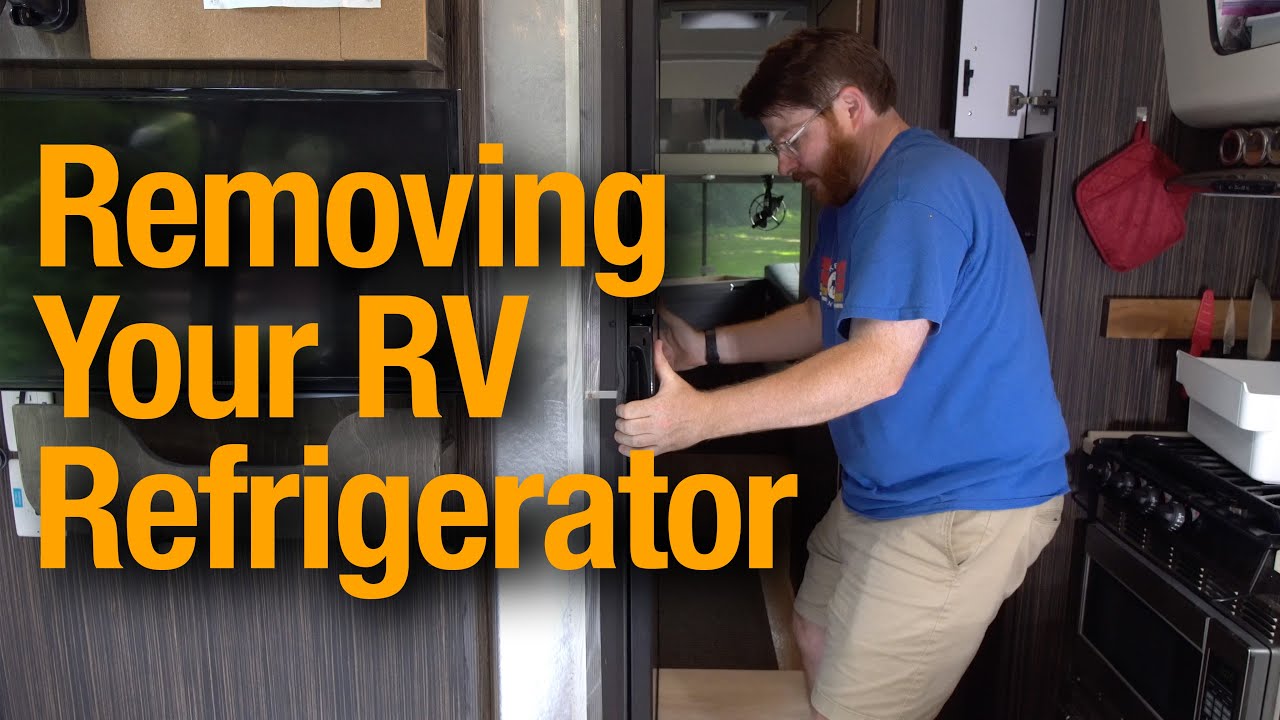
Image Source: i.ytimg.com
Easy Steps Guide: How To Remove A Camper Fridge Safely
Do you need to take out your camper fridge? This guide helps you do that safely. Maybe your old fridge is broken. Maybe you want a new one. Taking it out needs care. It is a job you can do. Just follow these steps. Safety comes first.
Why Take Out Your Fridge?
People take out a camper fridge for many reasons. Maybe it stopped working right. You might fix it. Or you might put a new one in. This is called Replacing an RV refrigerator.
- Old fridge is broken.
- You want a bigger fridge.
- You want a fridge that uses less power.
- You need to fix something behind the fridge.
- You want a different kind of fridge (like a house fridge).
Whatever the reason, Removing an RV refrigerator is a job you can do. It just needs careful steps.
Key Safety Tips
Before you touch anything, stop all power. This is very important. Turn off the electricity to the fridge. Turn off the gas line. Gas is very dangerous. It can start a fire. It can make you sick. Make sure the main gas tank valve is closed tight. Make sure the main power breaker is off.
- Turn OFF the gas: Find your main gas bottle valve. Close it. Turn off any small shut-off valve right by the fridge gas line if there is one.
- Turn OFF the power: Find the power breaker for the fridge in your camper’s power box. Flip it off. Pull the plug if it has one. Turn off the main power from shore or battery too.
- Empty the fridge: Take out all food. Take out all shelves. Clean the inside well. This makes it lighter. It makes it easier to handle.
- Get help: A camper fridge is heavy. Do not try to lift it alone. Find a strong friend to help you. You will need help to pull it out. You will need help to carry it away.
- Plan your path: Where will you take the fridge after you pull it out? Make sure the path is clear. Make sure the door is wide enough. Plan how you will get it out of the camper.
- Wear gloves and glasses: This keeps your hands safe. It keeps your eyes safe from dust or falling bits.
Safety is the first step in Removing an RV refrigerator. Do not skip these safety checks.
Tools You Will Need
You will need some tools. Having the right RV fridge removal tools makes the job easier and safer.
| Tool | Why You Need It |
|---|---|
| Screwdrivers | To take out screws. Need flathead and Phillips head. |
| Wrenches | To disconnect the gas line. Need two the same size. |
| Pliers | To hold wires or help with small parts. |
| Drill/Nut Driver | Can make taking out screws faster. Use the right size. |
| Wire Strippers | Maybe needed to disconnect wires if they are cut. |
| Electrical Tape | To wrap the ends of wires you disconnect. |
| Gas Pipe Tape | To seal the gas line end after you take it off. |
| Utility Knife | To cut old sealant or trim pieces. |
| Gloves | To protect your hands. |
| Safety Glasses | To protect your eyes. |
| Hand Truck/Dolly | To move the heavy fridge after it is out. |
| Bucket/Rag | For cleaning or catching anything. |
| Camera/Phone | To take pictures of wire hookups. Helps when putting a new one in. |
Make sure you have these tools ready before you start.
Getting Ready to Remove
Okay, let’s get ready. Make sure the gas is OFF. Make sure the power is OFF. The fridge should be empty and clean inside.
Open the Outside Vent Cover
Camper fridges often vent outside. They have a cover on the side of the camper wall. You need to take this cover off. This is part of Camper fridge ventilation removal.
- Find the plastic vent cover on the outside of your camper, usually behind the fridge area.
- Look for screws around the edge of the cover.
- Use your screwdriver or drill to take out all the screws.
- Gently pull the vent cover away from the wall. It might be a little stuck.
- Put the cover and screws in a safe place.
Now you can see the back of your fridge. This is where the gas line and wires are hooked up. You need access here for Disconnecting RV fridge hookups.
Finding the Hookups
Look at the back of the fridge in the opening you just uncovered. You will see different parts.
- The Gas Line: This is a small metal pipe. It comes from your camper’s gas system. It hooks onto a part of the fridge, often near a small gas valve.
- Electric Wires: You will see wires. Most camper fridges use two types of power:
- 12-volt DC: These wires power the fridge’s main computer board and the inside light. They usually come from your camper’s battery system. There are usually two wires, often red and white or black and white.
- 120-volt AC: These wires power a heating element. This element makes heat when you are plugged into shore power (like at a campsite). This often looks like a regular electrical cord plugged into an outlet on the back of the fridge, or wires connected in a small box.
- Flue Stack: This is a metal pipe that goes up from the bottom of the fridge. It takes heat and fumes from the gas burner out through the roof or upper vent. Be careful not to bend or break this.
- Cooling Unit Pipes: These are the main parts on the back of an Absorption fridge removal. They are metal pipes that make the cooling happen. They can be delicate. Do not pull hard on them.
Take a picture of the hookups before you touch them. This helps you remember where everything goes when you put a new fridge in.
Disconnecting the Hookups
Now it’s time to safely disconnect the gas and electric.
Disconnecting the Gas Line
This step is very important. Make sure the gas supply is OFF at the tank and any other valves.
- Find where the metal gas pipe connects to the fridge. There is a fitting there.
- You will need two wrenches that fit the nuts on the fitting.
- Use one wrench to hold the fitting on the fridge steady. Do not let it turn.
- Use the second wrench to turn the nut on the gas pipe. Turn it slowly. Turn it counter-clockwise (lefty loosey).
- The nut will loosen. You can then unscrew the pipe fitting from the fridge valve.
- A very small amount of gas might come out when you first break the seal. This is normal if the gas is turned off at the source.
- Once the pipe is free, carefully bend it a little bit away from the fridge. Do not kink it.
- Put gas pipe tape (yellow Teflon tape is good for gas) or a cap over the open end of the gas pipe coming from your camper. This stops dirt from getting in. It also is an extra safety step in case gas is accidentally turned on later.
Leave the gas pipe taped or capped until you are ready to hook up a new fridge. This is a key part of safe Disconnecting RV fridge hookups.
Disconnecting the Electric Wires
Now disconnect the power wires. You turned off the breaker or unplugged the fridge earlier. This is good. But still treat the wires with care.
- Find the 12-volt wires. They often go into a small box or connect with screw terminals. Note which wire goes where (positive/negative). Take a picture. Unscrew them or unclip them.
- Find the 120-volt wires.
- If there is a plug, just unplug it from the outlet on the back of the fridge.
- If the wires go into a box with a cover, take off the cover. You will see wires connected with wire nuts or screws. Note which wire goes where (black, white, green). Take a picture. Unscrew them or untwist the wire nuts.
- Wrap the bare ends of all disconnected wires with electrical tape. This is very important for safety. It stops them from touching each other or anything metal, just in case power is ever turned back on by mistake.
The wires are now safely disconnected.
Finding the Mounting Screws
Your fridge is held in place by screws. These screws stop it from moving when your camper rolls down the road. You need to find and take out all these screws.
- The most common place for screws is inside the fridge door opening.
- Open the fridge and freezer doors all the way.
- Look along the edges of the fridge frame that meet the camper wall or cabinet.
- Some fridges have trim pieces you need to snap or pull off. Look for small caps covering screw heads. Pop these caps off.
- Use your screwdriver to take out each screw you find.
- Screws might be at the top of the fridge frame, at the bottom, or on the sides.
- Dometic camper fridge removal and Norcold RV fridge removal models usually have screws hidden in similar places, often under trim or caps inside the door frame. Check your fridge’s manual if you have it; it might show you where they are.
Some fridges might have extra brackets or screws on the outside of the frame, hidden by the cabinet trim. Look carefully all around the fridge edge where it meets the camper structure.
Count the screws as you take them out. Keep them all in a small bag or cup. You need to find all the screws. If the fridge won’t budge later, it’s usually because you missed a screw.
Pulling the Fridge Out
Okay, the hookups are disconnected and safe. All screws are out. The fridge should now be free to move.
- This is where your helper is very important. Stand with your helper in front of the fridge opening.
- Gently wiggle the fridge. It should feel loose.
- Slowly pull the fridge straight forward out of the cabinet hole.
- The fridge will feel heavy. Pull together with your helper, using your legs, not just your back.
- As you pull it out, be careful of the gas pipe and electric wires you disconnected. Make sure they do not catch on anything.
- Keep the fridge level as you pull it out. The cooling unit on the back of an Absorption fridge removal does not like to be tipped or turned upside down for long. Pulling it straight out is best.
- Pull the fridge all the way out of the opening until it is standing in the middle of your camper floor.
This is the main part of Removing an RV refrigerator. It might take some effort. Do not force it too hard. If it gets stuck, stop and check again for missed screws or snagged wires/pipes.
Slide Out RV Refrigerator
The process of pulling the fridge out is sometimes called sliding it out. Think of it like a big, heavy drawer. You are using muscle to Slide out RV refrigerator from its place. Keep the path clear so you can pull it all the way out without hitting things.
Moving the Fridge Away
Now the fridge is sitting out in your camper. You need to get it outside.
- Remember, it is heavy.
- This is a good time to use a hand truck or dolly if you have one. Carefully tip the fridge back onto the hand truck. Your helper can steady it.
- Wheel or carry the fridge carefully to the nearest exit.
- Watch out for steps or ramps. Take it slow and work together.
- Be extra careful if you are removing an Absorption fridge removal. Try not to lay it flat for a long time. If you must lay it down for a short time to get it out the door, lay it on its back or side, but stand it upright again as soon as you can. This helps the fluid inside the cooling unit stay where it should be.
Find a safe place to put the old fridge. Maybe you are taking it for repair. Maybe you are throwing it away. Make sure you get rid of it the right way; fridges contain chemicals that need special handling.
After the Fridge is Out
Now you have a big empty space where the fridge used to be.
- Clean the area well. There might be dust, dirt, or even dead bugs in the back area (the outside vent space).
- Check the insulation around the opening. Is it in good shape?
- Look at the gas pipe and electric wires you disconnected. Are they safely taped off? Are they in a good spot?
- If you are not putting a new fridge in right away, you might want to cover the hole for safety and to stop air leaks. You can use a piece of plywood or thick cardboard.
This is also a good time to inspect the outside vent area you opened. Clean it out if needed. Make sure the flue opening (the pipe going up) is clear.
Dealing with Specific Fridge Types
While most camper fridges (Dometic and Norcold) come out in a similar way, here are a few specific points.
Dometic Camper Fridge Removal
Dometic is a very common brand.
* Look for mounting screws inside the door frame, often under plastic caps.
* The outside vent cover is key for access.
* Wire hookups are usually clearly marked or go into a terminal block.
* Gas connections are standard.
* Follow all the general steps for Removing an RV refrigerator.
Norcold RV Fridge Removal
Norcold is another common brand.
* Mounting screws are typically inside the door frame, similar to Dometic. Check the trim pieces carefully.
* Outside vent provides access to hookups.
* Wire hookups might be in a small box or use different connector types. Pay attention when Disconnecting RV fridge hookups.
* Gas connection is standard.
* Follow the general steps. The process for Norcold RV fridge removal is very similar to Dometic camper fridge removal.
Absorption Fridge Removal
Most camper fridges are absorption types.
* The main difference is the cooling unit on the back with metal pipes and fluid.
* Careful handling is needed. Try not to tip it upside down or lay it flat for too long.
* Disconnecting the gas line is a required step, as absorption fridges use gas (or electric heat) to create the cooling cycle.
* Be extra careful not to damage the cooling unit pipes or the flue stack during Absorption fridge removal.
What If Things Go Wrong? Troubleshooting
Sometimes things do not go exactly as planned. Here is some Troubleshooting RV fridge removal.
- The fridge won’t move: Did you get ALL the screws? Look again, very carefully. Check inside the door frame, top, bottom, sides. Check around the outside edge of the fridge where it meets the cabinet. Make sure the gas line and wires are completely disconnected and not snagged on anything.
- You smell gas: STOP. Turn the main gas supply OFF at the tank right away if you did not already. Open windows and doors. Get fresh air moving. Do not turn on any lights or anything electric. Find where the smell is coming from. It might be a little bit from the pipe when you first disconnect it, but a strong smell is bad. If you can’t stop it, get everyone out and call the gas company or fire department. This is very serious.
- Wires sparked: You should have turned off the power! If you did and they sparked, maybe the wrong breaker was turned off. Turn off the main power to the camper (at the shore power post or the main battery disconnect). Always double-check power is off with a test light or meter if you know how.
- The fridge is heavier than we thought: Stop trying to lift it wrong. Get another helper if you can. Find a stronger dolly or hand truck. Figure out the best way to slide it out and move it. Don’t hurt your back.
- A pipe on the back is bent: This is bad for an absorption fridge. The cooling unit pipes are fragile. If you bent one badly, the fridge might be broken. Be very careful when pulling it out and moving it.
- The hole is not the right size for the new fridge: Measure the old fridge and the hole before you buy a new one! If the new one is too big or too small, you might need to change the cabinet opening. This is a bigger job. Replacing an RV refrigerator needs careful measuring first.
Good Troubleshooting RV fridge removal is about stopping, checking, and being safe.
Putting a New Fridge In (Briefly)
Replacing an RV refrigerator is mostly the steps you just did, but backward.
- Get the new fridge ready.
- Carefully Slide out RV refrigerator (the new one!) into the opening. Make sure the back lines up with the outside vent hole.
- Connect the gas line. Use new gas pipe tape on the threads. Tighten carefully but firmly with two wrenches.
- Connect the electric wires. Match them to where the old ones were (use your pictures!). Wrap connections safely.
- Push the fridge fully into the hole.
- Put the mounting screws back in place (inside the door frame).
- Turn on the gas supply slowly. Check the gas connection at the fridge for leaks using soapy water (bubbles mean a leak!).
- Turn on the electric power (breaker).
- Put the outside vent cover back on.
- Test the new fridge to make sure it cools down.
Taking out the old fridge is the first half of Replacing an RV refrigerator.
Final Thoughts on Removal
Taking out a camper fridge seems like a big job. But if you break it down into small steps, it is very possible. Remember the main things:
- Safety First: Gas OFF, Power OFF.
- Get help: It is heavy.
- Tools: Have your RV fridge removal tools ready.
- Access: Open the outside vent for Camper fridge ventilation removal.
- Disconnect: Carefully do Disconnecting RV fridge hookups (gas and electric).
- Screws: Find and remove ALL mounting screws.
- Pull: Gently Slide out RV refrigerator.
- Move: Carefully carry it away with your helper.
- Type matters: Be extra careful with Absorption fridge removal handling.
By following these easy steps and putting safety first, you can successfully remove your camper fridge. Good job planning this out!
Frequently Asked Questions (FAQ)
Q: How long does it take to remove a camper fridge?
A: For someone new to it, it might take a few hours. Getting access, finding all the screws, and safely disconnecting everything takes time. With practice or help, maybe less time.
Q: Can I just cut the gas line or wires?
A: NO! Never cut the gas line unless you are a trained professional and the main supply is shut off far away. Cutting wires is also unsafe if you are not sure the power is completely off and you do not know how to safely reconnect them later or cap them. Always disconnect at the fittings or terminals.
Q: How heavy is a camper fridge?
A: They are surprisingly heavy. A medium-sized RV absorption fridge can weigh 75 to 125 pounds or more. This is why getting a helper is a must.
Q: What happens if I lay an absorption fridge flat?
A: Laying it flat for a short time (like moving it out a door) is usually okay. But laying it flat for a long time (hours or days) can make the fluid in the cooling unit move to the wrong places. This can stop it from cooling properly later. If this happens, you might need to stand it upright for 12-24 hours to let the fluid settle before turning it on again.
Q: What do I do with the old fridge?
A: You can try to sell it if it works or can be fixed. Check with local repair shops. If it’s truly broken, you need to dispose of it properly. Fridges contain coolants that are bad for the environment. Call your local waste management or a scrap metal dealer. They often have special rules for picking up fridges.
Q: Can I put a regular house fridge in my camper?
A: Yes, many people do this. It is called a “residential fridge conversion” or Replacing an RV refrigerator with a house type. However, house fridges need 120-volt power all the time (they don’t run on gas). This means you usually need a good inverter and battery bank, or always be plugged into shore power. The size must also fit the hole and the door.
Q: I’m not sure about touching the gas line. What should I do?
A: If you are not comfortable working with gas, it is best to hire a qualified RV technician. Gas leaks are dangerous. It is worth paying a professional for this step if you have any doubts. They can safely disconnect the gas line for you. You might be able to do the rest of the steps (disconnecting electric, removing screws, pulling fridge) yourself after they handle the gas.