
How long does it take for AC ice to melt? It usually takes 1 to 24 hours for the ice on your air conditioner to melt away completely on its own. The time changes depending on how much ice is there, the weather outside, and if you do things to help it melt faster. Letting it melt naturally takes the longest. Helping it along can speed things up a lot.
When your air conditioner freezes up, it’s not working the way it should. Ice forming on the coils is a sign of a problem. You can’t just ignore it. Fixing the ice and finding out why it happened is important to keep your home cool and prevent bigger, more costly damage. This guide will tell you why your AC freezes, how to safely thaw it, how long that takes, and how to stop it from happening again.
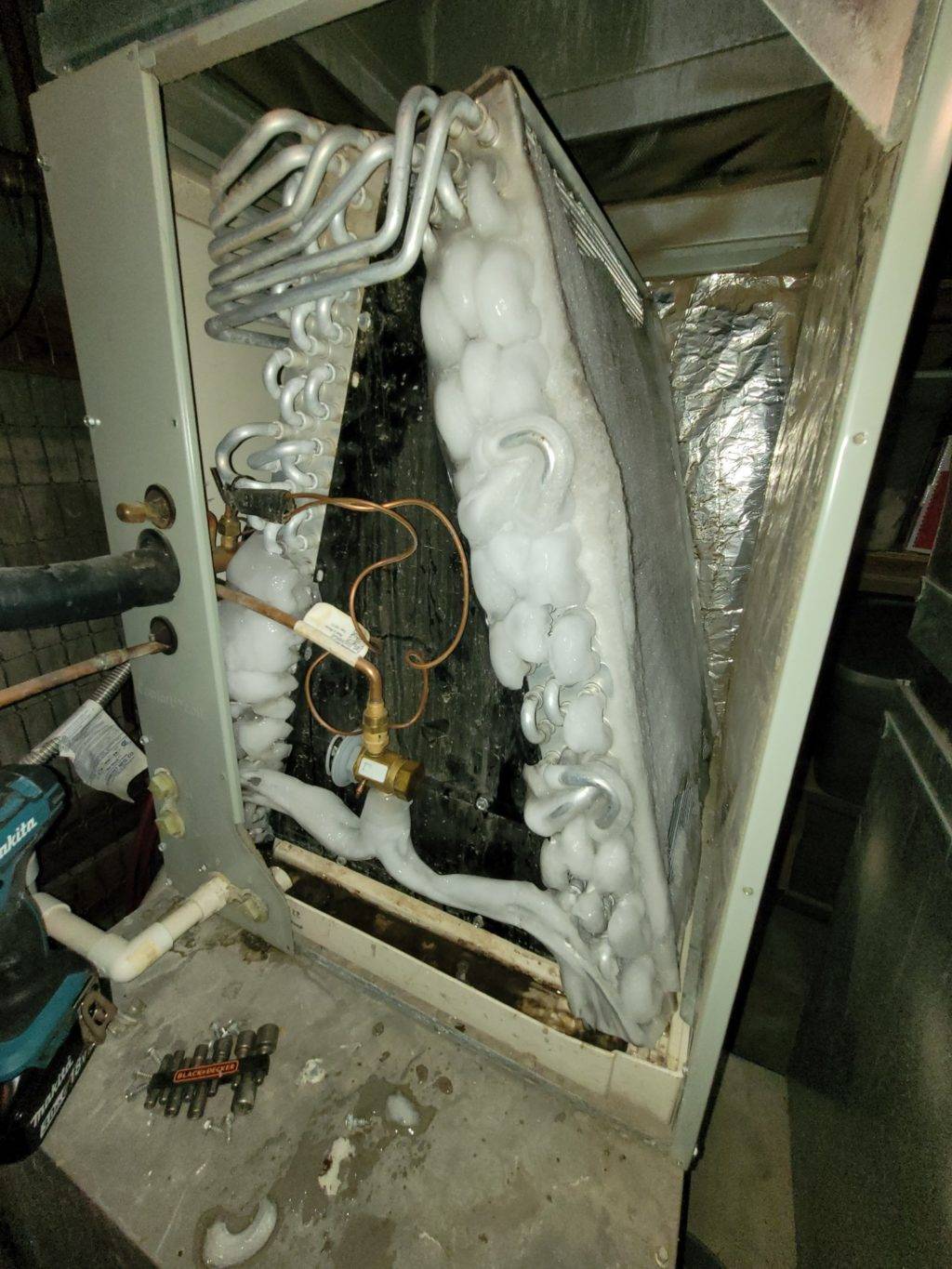
Image Source: www.manmadediy.com
Why Your AC Turns into an Ice Block
Air conditioners cool your home by moving heat from inside to outside. This uses a special liquid or gas called refrigerant. The indoor part of your AC has coils that get very cold when the refrigerant passes through. Air blows over these cold coils, and the heat from the air is taken away. This cooled air is then sent back into your rooms.
Ice forms when the indoor coil (called the evaporator coil) gets too cold, below freezing point. This happens when warm air doesn’t flow over the coil right, or when there isn’t enough refrigerant. Instead of the air’s heat being removed, moisture in the air freezes onto the coil. More moisture freezes onto the ice, making it grow bigger. Let’s look at the common reasons (Causes of frozen AC coil).
Low on Coolant
This is one of the main reasons (Why does air conditioner freeze up). The refrigerant loop in your AC system is sealed. The amount of refrigerant put in is just right. If the system loses some refrigerant, maybe from a small leak, there isn’t enough to do the job. When there isn’t enough refrigerant, the pressure drops. This causes the evaporator coil to get much colder than it should, leading to ice. You need a trained technician to find leaks and add refrigerant. This is not a DIY job.
Air Can’t Flow Right
Good airflow over the indoor coil is very important. If air doesn’t move well, the heat from the air isn’t absorbed by the coil. The coil stays too cold, and ice forms. Many things can stop air from flowing freely.
* Dirty Air Filter: A clogged filter is like trying to breathe through a blanket. It’s the most common cause of poor airflow. The blower fan struggles to pull air through it. Less air gets to the coil.
* Blocked Vents or Returns: If you close too many supply vents in rooms or if furniture blocks return vents (where air goes back to the AC), the system can’t move enough air.
* Weak Blower Fan: The fan motor that pushes air through your ducts might be weak or failing. This means air isn’t moving fast enough over the coil.
* Ducted Leaks: Holes or gaps in your ductwork can cause air to escape before it reaches the coil or after it’s cooled, reducing the amount of air moving across the coil.
Dirty Parts
Dirt and grime can build up on the evaporator coil itself. This dirt acts like a blanket, stopping the coil from properly absorbing heat from the air. Even if air is flowing well, the coil can’t warm up enough to stay above freezing. This can cause ice to form on the coil surface.
Something’s Broken
Sometimes, a mechanical part in the AC system stops working right.
* Metering Device Issue: This part controls how much refrigerant goes into the evaporator coil. If it sticks open or closed the wrong way, it messes up the refrigerant flow and can cause freezing.
* Thermostat Problems: A faulty thermostat might not be telling the AC the correct temperature or might cause it to run strangely, sometimes contributing to freezing.
* Fan Relay or Capacitor: Issues with the electrical parts that help the fan motor start or run can cause the indoor fan to run too slowly or not at all, stopping airflow.
Running When It’s Cold Outside
Most air conditioners are made to work when the outside temperature is above a certain point, usually around 60-65°F (15-18°C). If you try to run the AC when it’s colder than this, the pressure and temperature inside the system can drop too low, causing the evaporator coil to freeze.
Signs Your AC is Freezing Up
How can you tell if your AC system has turned into an icebox? There are several signs (Symptoms of a frozen AC system). Paying attention to these can help you catch the problem early before the ice gets too bad.
- Weak Airflow: You might notice that the air coming out of your vents isn’t blowing as strongly as it used to. As ice builds on the coil, it blocks the path for air to move through.
- Warm Air: Even though the system is trying to cool, the air coming out might feel just cool, or even warm. The icy coil can’t absorb heat well, and the blower might just be pushing air around the ice block instead of through the cooling fins.
- Visible Ice: This is the clearest sign. You might see ice on the copper lines going into the indoor unit or on the outdoor unit’s larger copper line (the insulated one). If you can safely look at the indoor coil (sometimes behind a panel), you’ll see ice there too. It can look like frost or a thick block of ice covering the coil fins.
- Puddles of Water: As the ice melts (especially when the system is off or trying to run with ice), the water has to go somewhere. The drain pan under the indoor unit can overflow, or water might drip from the unit, causing puddles near your furnace or air handler.
- Strange Noises: A frozen coil can sometimes cause unusual sounds. You might hear a gurgling or hissing sound from the refrigerant trying to move through the icy parts. Or, if ice is hitting the fan, you might hear scraping.
Recognizing these signs quickly is important. Running an AC that is frozen can damage the compressor, a very expensive part to replace.
What to Do When Your AC Freezes
Finding ice on your AC is not good news, but don’t panic. You need to stop the system from running and let the ice melt. Then, you need to figure out why it froze so it doesn’t happen again. Here’s what to do step-by-step (How to defrost frozen AC unit / Troubleshooting a frozen AC).
Step 1: Turn Off Power
This is the most important first step. You must turn off the cooling system.
* Go to your thermostat. Switch the system from “Cool” to “Off”.
* It’s also a good idea to switch the “Fan” setting from “Auto” to “On”. Running the fan (with the cooling off) helps move warm air over the coil, which can speed up the thawing process. Make sure the cooling is definitely off first.
* For safety, it’s best to also turn off the power switch near the indoor unit (usually on a wall or on the unit itself, looks like a light switch) and the power breaker for the outdoor unit at your main electrical panel. This stops the AC from accidentally turning back on while it’s still icy or while you’re looking at it.
Step 2: Let Nature Work
The simplest way to thaw the coil is to just wait. With the cooling turned off, the ice will naturally start to melt as it’s exposed to the warmer air around it. This is the safest method and requires no effort from you.
* Make sure the fan is running (set to “On” at the thermostat) if possible and safe. This circulates indoor air over the coil, bringing warmer air to the ice. This helps it melt faster than just letting it sit in still air.
* Put down towels or have a bucket ready near the indoor unit. As the ice melts, a good amount of water will collect in the drain pan. If the pan is full or the drain line is blocked, water can overflow.
Step 3: Help it Thaw (Optional)
If you want the ice gone faster (Thawing a frozen AC unit duration), you can try to speed things up.
* Use a Fan: Point a portable fan directly at the indoor coil (if you can safely access it). The moving air will bring warmer air to the ice surface and help it melt quicker.
* Warm Water (Use with Extreme Caution): Some people suggest using warm water. This can be risky. Never use hot water, as this can damage the coil fins. If you choose to use warm water, be very careful not to get water on any electrical parts. It’s usually safer to just let it melt naturally or use fans. The main drain pan and line need to handle the water, or you risk a big mess and water damage. This method is generally not recommended by professionals unless you know exactly what you are doing and can protect electrical components.
* Open Windows/Doors (If Outdoor Air is Warmer): If the outside air is significantly warmer than your indoor air (and not humid), opening windows and doors can bring warmer air into the house, slightly raising the temperature around the indoor unit and helping the ice melt. Close them once the ice is gone.
Step 4: Find the Problem
While the ice is melting, start thinking about why it froze. Check the simple things first (Troubleshooting a frozen AC).
* Look at your air filter. Is it dirty? Change it.
* Are supply vents open? Are return vents blocked by furniture or curtains? Open them up.
* Was it very cold outside when you were running the AC? Remember the outdoor temperature limits.
If these simple checks don’t reveal an obvious cause, the problem is likely more complex, like low refrigerant or a mechanical issue.
How Long Will the Thawing Take?
This is the big question (AC defrosting time frame). As mentioned earlier, it can take anywhere from an hour to a full day (How long does it take for AC ice to melt). There’s no single answer because several things affect how fast the ice melts.
What Makes Thawing Faster or Slower
Amount of Ice
A thin layer of frost melts much faster than a thick block of ice covering the entire coil and refrigerant lines. If the system just started to freeze, it might thaw in an hour or two. If it’s been freezing for a long time and has a lot of ice, it will take many hours, maybe even 12-24 hours for natural thawing.
Outside Temperature
If the temperature inside your home is warm (say 75-80°F or 24-27°C), the ice will melt faster than if your house is cooler. The warmer the air touching the ice, the quicker it thaws.
Moving Air
Running the indoor fan helps a lot. Moving air carries heat from the room to the ice surface, speeding up melting. If you just turn off the AC and fan and let it sit in still air, it will take much longer. Using an extra fan pointed at the unit helps even more.
Your Help
Using gentle methods like running the fan or pointing a separate fan can significantly reduce the thawing time. What might take 10-12 hours naturally might take 4-6 hours with good airflow.
Here is a general idea of thawing times:
| Ice Amount | Method | Estimated Time (Hours) | Notes |
|---|---|---|---|
| Light frost/Thin ice | Natural (AC Off, Fan Off) | 2 – 6 | Slowest method |
| Light frost/Thin ice | Natural (AC Off, Fan On) | 1 – 3 | Best balance of speed & safety |
| Light frost/Thin ice | Fan + Warm Room Air | 1 – 2 | Faster with direct fan |
| Heavy ice block | Natural (AC Off, Fan Off) | 12 – 24+ | Can take a very long time |
| Heavy ice block | Natural (AC Off, Fan On) | 6 – 12 | Running the fan is key for heavy ice |
| Heavy ice block | Fan + Warm Room Air | 4 – 8 | Good airflow speeds it up significantly |
| Heavy ice block | Warm Water (Careful!) | 1 – 4 | Risky, use with extreme caution or avoid |
Note: These are just estimates. The actual time can vary.
Be patient. It’s much better to wait until all the ice is completely gone before turning the AC back on. Trying to run a system with even a little ice left can cause it to freeze up again quickly and risk damage.
Steps After the Ice is Gone
Once all the ice has melted and the coils are clear, don’t just turn the AC back on immediately. You need to take a few steps to make sure the system is ready and to try and prevent the freezing from happening again (Fixing a frozen air conditioner coil).
Look Closely at the Coils
Once the ice is gone, the indoor coil (evaporator coil) will be visible. Check it carefully.
* Are the metal fins clean? Or are they covered in a layer of dirt, dust, or even mold? Dirty coils are a common cause of freezing.
* Are the fins straight and orderly, or are they bent and flattened? Bent fins can also block airflow. You can buy a fin comb to gently straighten them, but be very careful not to damage the delicate tubes.
Fix What Caused It
Before you start cooling again, address the problem you found.
* Change the Air Filter: If it was dirty, put in a clean one. Make this a habit.
* Clear Blockages: Make sure all air supply and return vents are open and not blocked by anything.
* Check Drain Line: Make sure the drain pan is empty and the drain line isn’t clogged. You can often clear a minor clog using a wet/dry vacuum on the outdoor end of the drain line or by carefully pouring a little vinegar or bleach (check your manual for what’s safe) down the line opening near the indoor unit to kill algae/mold.
* Check Outdoor Unit: Make sure the outdoor unit (condenser) is clean and clear of leaves, dirt, or anything blocking airflow around it.
If you suspect low refrigerant, a mechanical part failure, a very dirty coil you can’t clean yourself, or if the freezing happens again after you’ve done the simple checks, you must call a professional HVAC technician. They have the tools and knowledge to diagnose and fix these more complex issues safely.
Wait Before Turning Back On
Even after the ice is gone, the coils might still be very cold and wet. Turn the power back on at the breaker and the switch, but wait at least 1-2 hours before switching the thermostat from “Off” or “Fan On” back to “Cool”. This gives everything a chance to dry off a bit and for temperatures and pressures in the system to equalize.
Watch How it Runs
Once you turn the cooling back on, pay attention.
* Does the air feel cold coming from the vents?
* Is the airflow strong?
* Check the indoor and outdoor units after the AC has been running for a while (30 minutes to an hour). Is any frost starting to form?
If the system freezes up again quickly after you’ve fixed the simple things, the problem is definitely more serious and needs a technician.
Stop Your AC From Becoming an Iceberg
The best way to deal with a frozen AC is to stop it from freezing in the first place (Preventing air conditioner freezing). Regular maintenance is key. Here are the most effective ways to prevent air conditioner freezing.
Change Filters Often
This is the easiest and cheapest preventative step. Check your air filter every month, especially during cooling season. If it looks dirty, change it. A clean filter allows air to flow freely over the coil. A good rule of thumb is to change standard filters every 1-3 months, but very dirty homes or homes with pets might need changes more often.
Keep Air Vents Open
Don’t close off vents in unused rooms to try and save money. Your AC system is designed for a specific amount of airflow. Closing too many vents reduces this flow, which can lead to freezing. Keep supply and return vents open and unblocked.
Clear Space Around Outside Unit
The outdoor unit (condenser) needs good airflow to release heat. Make sure there are no plants, fences, or debris too close to it. Keep it clean from leaves and dirt. While this unit freezing isn’t the primary issue discussed (that’s the indoor coil), airflow problems can sometimes indirectly impact the system pressure and contribute to issues.
Get Yearly Check-Ups
Schedule professional HVAC maintenance every spring before you start using your AC heavily. A technician will clean the coils, check refrigerant levels (Check Coolant – Pro Job), inspect components, and make sure everything is running efficiently and safely. This can catch problems like low refrigerant or dirty coils before they cause freezing.
Don’t Run When Too Cold
Be mindful of the outside temperature. Don’t set your thermostat to “Cool” if the outdoor temperature is below the recommended operating limit (usually 60-65°F / 15-18°C for standard ACs). Use fans or open windows if you need cooling in mild weather.
Clean Coils (Pro or Careful DIY)
The indoor evaporator coil and the outdoor condenser coil need to be clean. A professional cleaning is the most thorough way to ensure dirt isn’t causing problems. If you’re comfortable and your unit is accessible, you might be able to clean visible parts of the indoor coil yourself using a soft brush and approved coil cleaner, but be very careful not to damage fins or electrical parts. Outdoor coils can often be sprayed gently with a hose (with power off!).
Expert Tips for a Healthy AC
Keeping your AC running well means paying attention and acting fast when something seems wrong.
See the Signs Early
Don’t wait until you see a thick block of ice or have water puddles. If you notice weaker airflow or the air isn’t as cool as it should be, check your filter first. These early signs can mean a problem is starting.
When to Call a Technician
You should call a professional technician if:
* The simple fixes (changing filter, opening vents) don’t solve the problem.
* You suspect low refrigerant (this requires special tools and licensed handling).
* The coil is very dirty and you can’t safely clean it.
* You see physical damage or suspect a part is broken.
* The system keeps freezing up even after thawing and checking the basics.
* You are not comfortable doing the troubleshooting or cleaning yourself.
Attempting complex repairs or handling refrigerant yourself can be dangerous and can cause more damage to the system.
Common Questions About Frozen ACs
Can I run my AC if it’s frozen?
No, you absolutely should not run your AC if you know or suspect it is frozen. Running it can cause serious damage to the compressor, which is the heart of the system and very expensive to fix or replace. Turn it off right away.
Is a frozen AC bad?
Yes, a frozen AC is bad. It means the system is not working correctly, and running it in this state can cause damage, shorten the lifespan of the unit, and lead to costly repairs, especially to the compressor.
How often should I change my air filter?
Check your filter at least once a month. If it looks dirty or clogged, change it. Depending on the type of filter and how much you use your AC (and factors like pets or allergies), you might need to change it every 1-3 months. A dirty filter is a major cause of freezing.
Can I pour hot water on the ice to melt it faster?
No, do not use hot water. Hot water can damage the delicate fins on the coil. If you want to use water to speed up melting, use only lukewarm or cool water and be extremely careful to keep water away from any electrical parts. Using fans is a much safer way to speed up the thaw.
Why does my AC keep freezing?
If your AC freezes, you thaw it, and it freezes again soon after, it means the underlying problem wasn’t fixed. Common ongoing problems include a refrigerant leak (low coolant), a persistent airflow blockage (like a duct issue or weak fan), or a dirty coil that wasn’t properly cleaned. You will likely need a professional to diagnose and fix the real issue.
Conclusion
Dealing with a frozen air conditioner requires patience and careful steps. The most important thing is to turn the system off right away to let the ice melt, which can take anywhere from 1 to 24 hours depending on different factors. While it’s thawing (Thawing a frozen AC unit duration), try to figure out the cause (Causes of frozen AC coil / Why does air conditioner freeze up) by checking simple things like the air filter and airflow.
Once the ice is completely gone, address the problem you found (Fixing a frozen air conditioner coil) before turning the AC back on. To avoid this headache in the future, focus on regular maintenance, especially changing your air filter often and getting professional check-ups (Preventing air conditioner freezing). By following these steps and knowing the signs (Symptoms of a frozen AC system), you can get your AC running right and keep it that way. If you can’t find the cause or fix it easily, don’t hesitate to call an HVAC expert (Troubleshooting a frozen AC) to ensure your system is safe and works well.